Aluminum Terraces
Aluminum vs. Wood Patio Covers: Which Material Wins in Florida?
When Florida homeowners begin planning a patio cover, the first decision is usually about material. Wood is the traditional choice and carries a certain aesthetic appeal, but aluminum has become the default for permanent outdoor structures in South and Central Florida for good reason. This article compares the two materials across the factors that matter most in this climate: durability, maintenance, cost of ownership, and architectural performance.
Florida's climate is uniquely hostile to wood. The combination of sustained high humidity, heavy seasonal rainfall, intense UV exposure, and — in coastal areas — salt-laden air creates conditions that accelerate every form of wood degradation. Wood patio covers in this environment require regular sealing or staining, typically every one to two years, and even with diligent maintenance they eventually warp, split, rot, and attract termites. The structural integrity that makes a patio cover safe declines steadily over time. If you're considering aluminum terraces for your Florida home, our team can help you explore the options.
Aluminum, by contrast, is impervious to the processes that destroy wood. It does not absorb moisture, so it cannot rot. It does not provide a food source for termites or other wood-destroying organisms. Powder-coated aluminum finishes are engineered to resist UV fading, and the material itself does not warp or split with changes in humidity. A well-built aluminum patio cover maintains its structural geometry and finish for decades with minimal upkeep — occasional cleaning with mild soap and water is generally all that is required.
The maintenance difference is where the comparison becomes most stark. A wood patio cover in Florida is a recurring project. Sealing, staining, inspecting for rot, replacing warped boards, and treating for pests are ongoing obligations. Each cycle costs money and time, and each cycle represents a period during which the structure is vulnerable to the very damage the maintenance is meant to prevent. Aluminum eliminates this cycle entirely. There is no sealing schedule, no staining, no pest treatment, and no board replacement.
Cost of ownership tells the full story. While a wood patio cover may have a lower initial material cost, the total cost of ownership over ten or fifteen years — factoring in maintenance labor, materials, and the eventual need for replacement — typically exceeds that of an aluminum structure. Aluminum's higher upfront investment is recovered through the elimination of maintenance costs and the longevity of the structure.
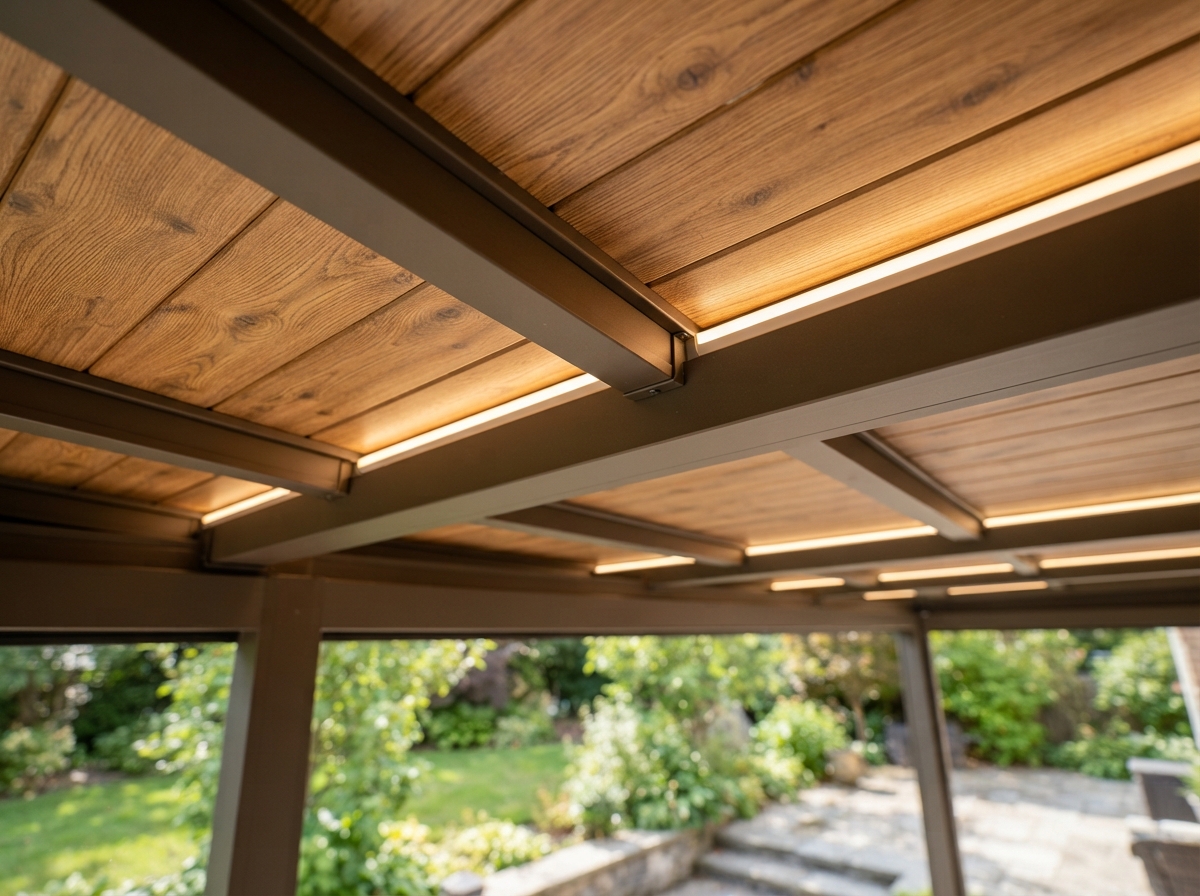
Architecturally, aluminum offers advantages that wood cannot match. Aluminum framing can span wider distances with fewer posts, creating more open, usable space beneath the cover. The material holds tighter manufacturing tolerances, producing cleaner lines and more precise joints. And modern finishing options — including powder coating in a range of colors and composite wood-look cladding that reproduces the appearance of natural wood grain — allow aluminum structures to complement virtually any architectural style.
For homeowners who want the warmth of wood without the maintenance, composite wood-look cladding applied to structural aluminum is an increasingly popular solution. This approach pairs the structural and durability advantages of aluminum with the visual character of wood, delivering the aesthetic many homeowners want without the upkeep that real wood demands in Florida.
The conclusion for Florida homeowners is straightforward. For permanent outdoor structures in this climate, aluminum is the rational choice. It outperforms wood on durability, maintenance, cost of ownership, and architectural precision. Wood remains an option for those willing to accept the maintenance burden, but for most homeowners building a structure meant to last, aluminum is the material that makes sense. For more on this topic, read our guide on Why Insulated Roof Panels Make Florida Patio Covers Cooler and More Usable.
Frequently Asked Questions
Learn About This Service
Our custom-designed aluminum terrace covers extend your living space outdoors, combining durable materials with clean lines.
Aluminum TerracesMore Articles
Construction
Why Insulated Roof Panels Make Florida Patio Covers Cooler and More Usable
Insulated roof panels block radiant heat and make covered patios comfortable during peak Florida hours. Here is how they work and why they matter.
Read Article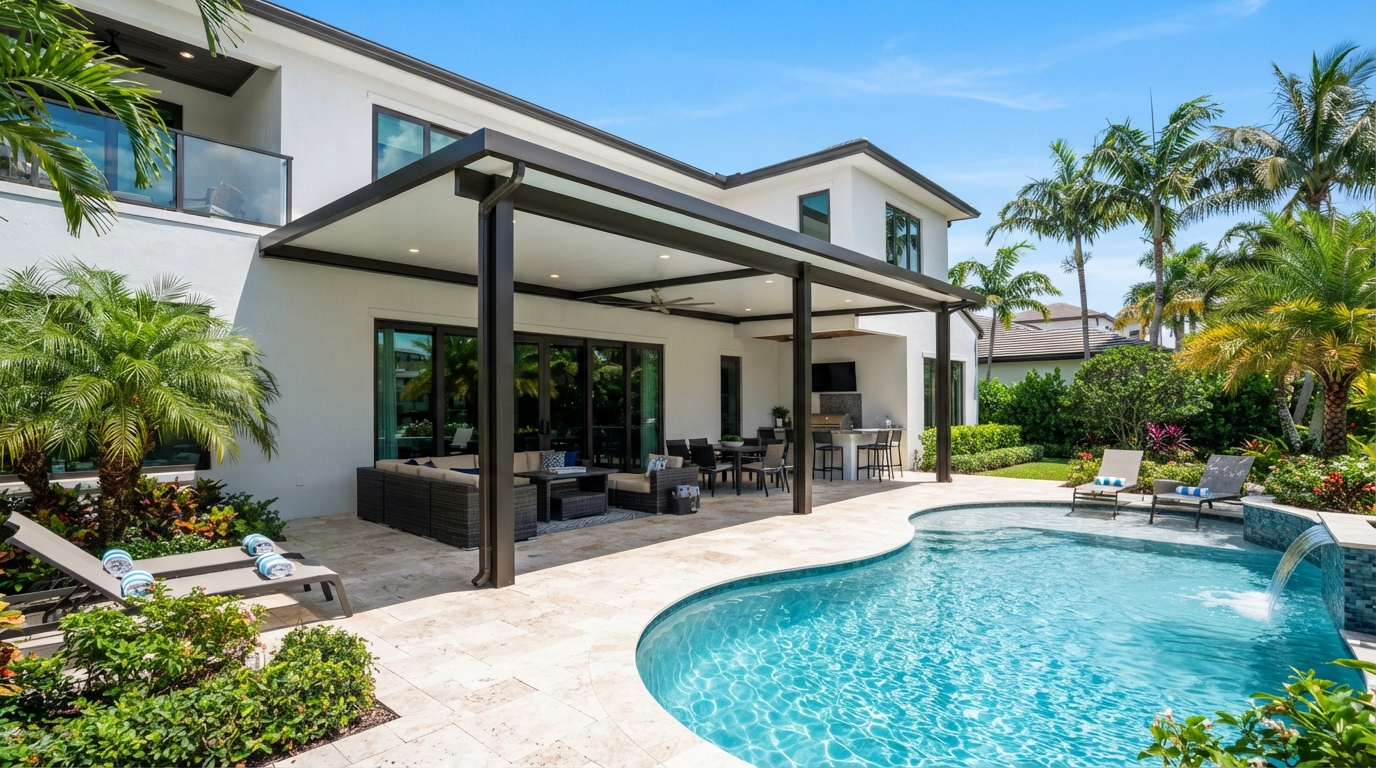
Planning
How to Choose the Right Patio Cover System for Your Florida Home
From flat panels to vaulted ceilings, attached to freestanding — a practical guide to selecting the patio cover system that fits your home, lifestyle, and budget.
Read Article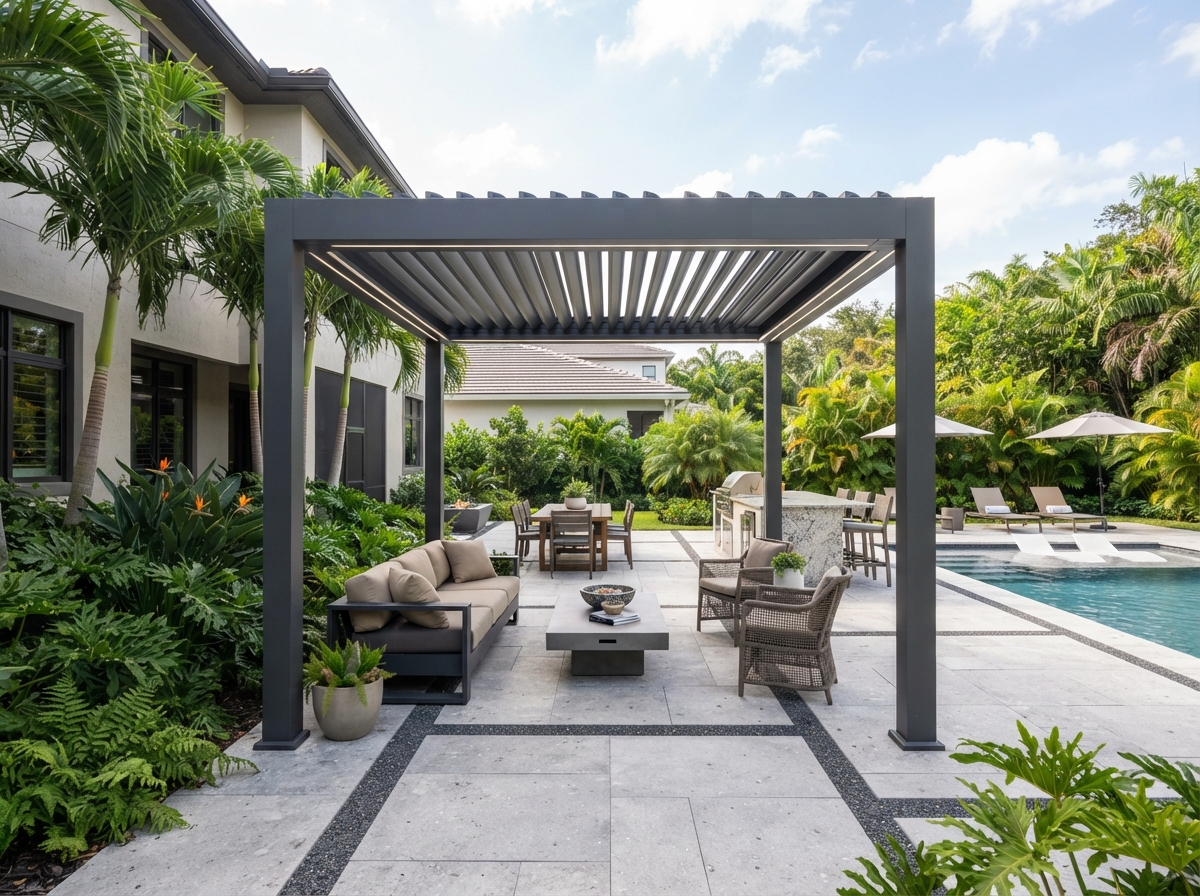
Design
Louvered vs. Fixed-Slat Pergolas: Choosing the Right Shade Strategy
Adjustable louvered and fixed-slat pergolas offer different benefits. This guide helps homeowners choose the right system for their outdoor space.
Read Article