Screens
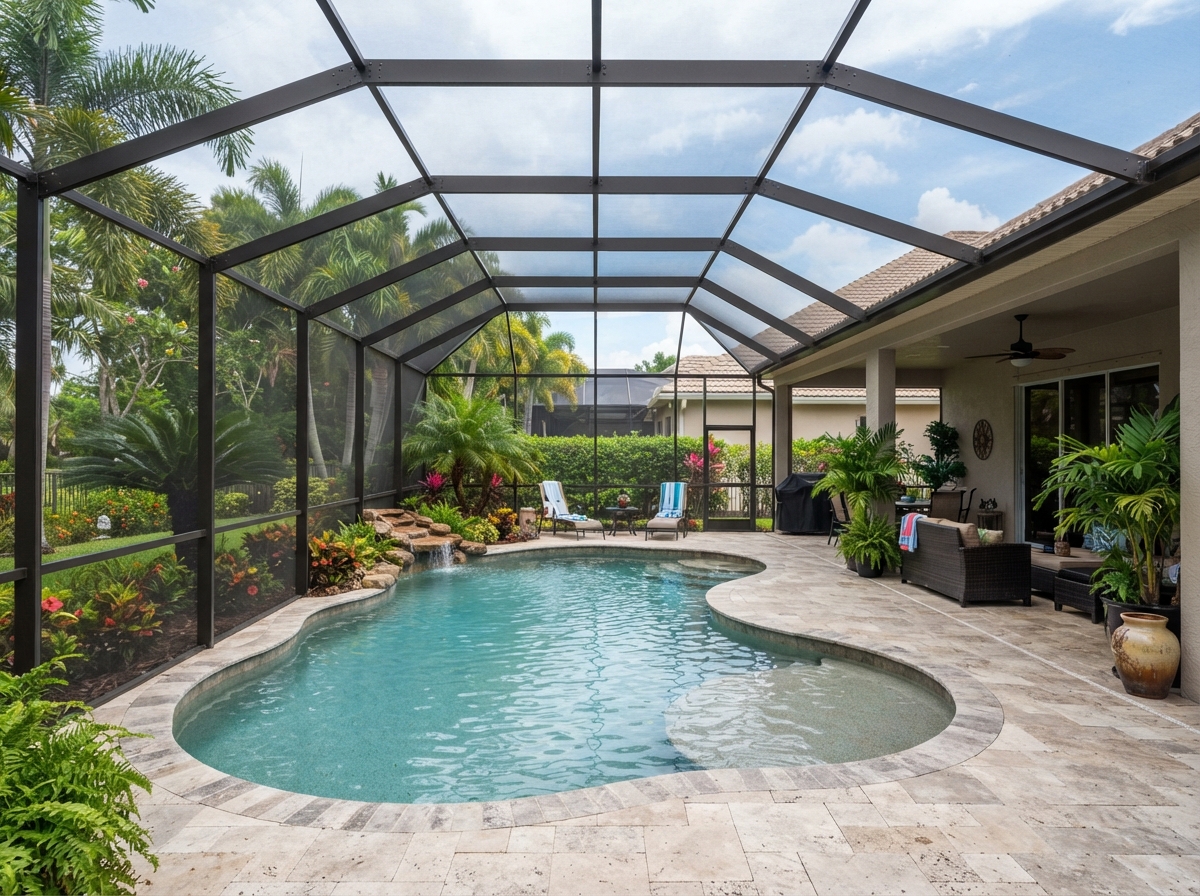
Custom aluminum screen enclosures that keep insects and debris out while preserving open sightlines.
Designed Around Your Home and Outdoor Lifestyle
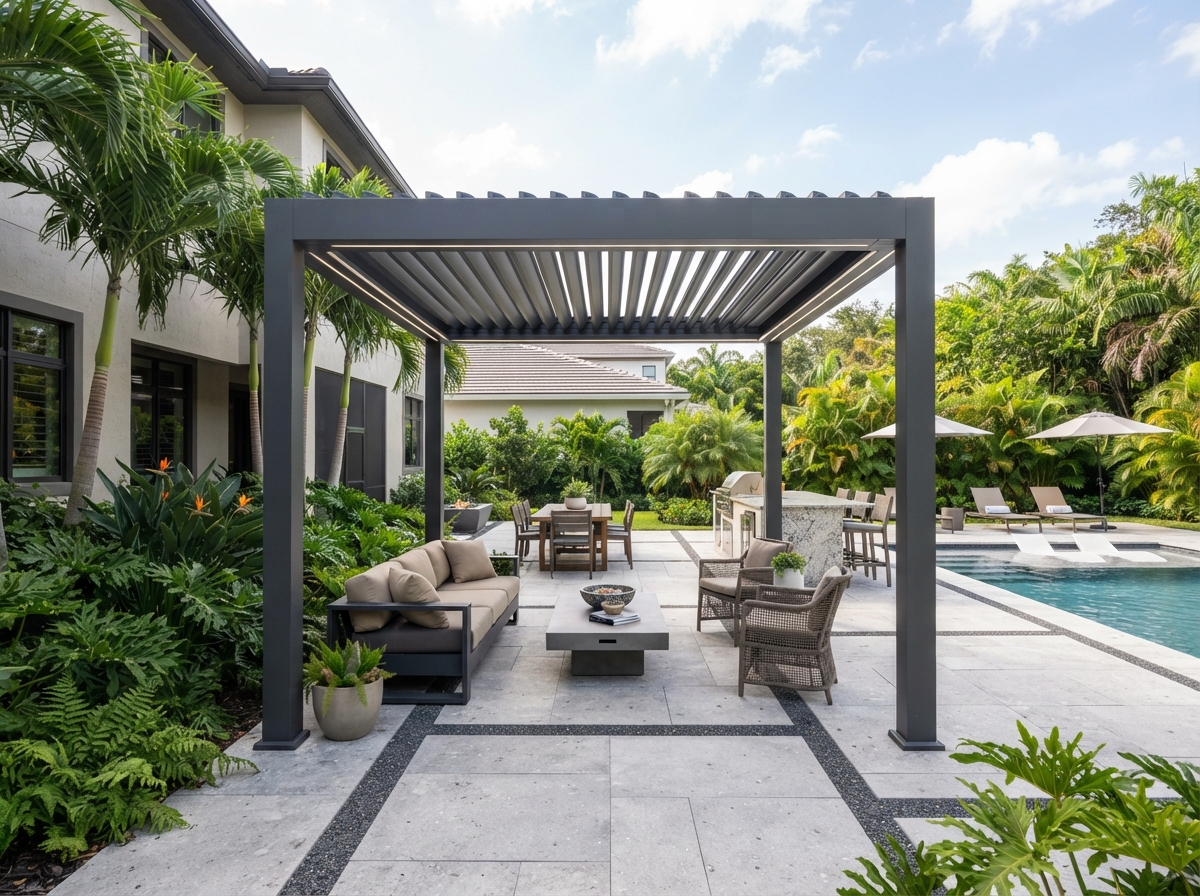
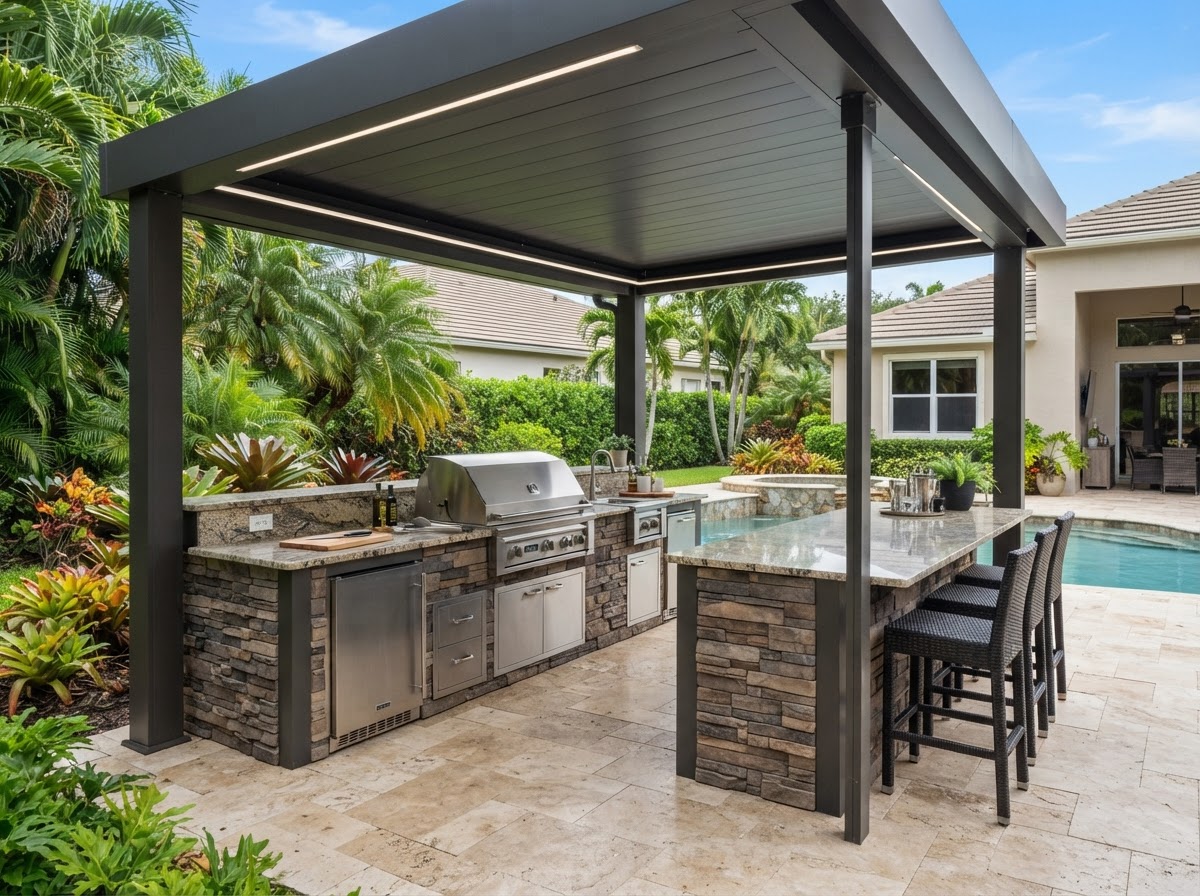
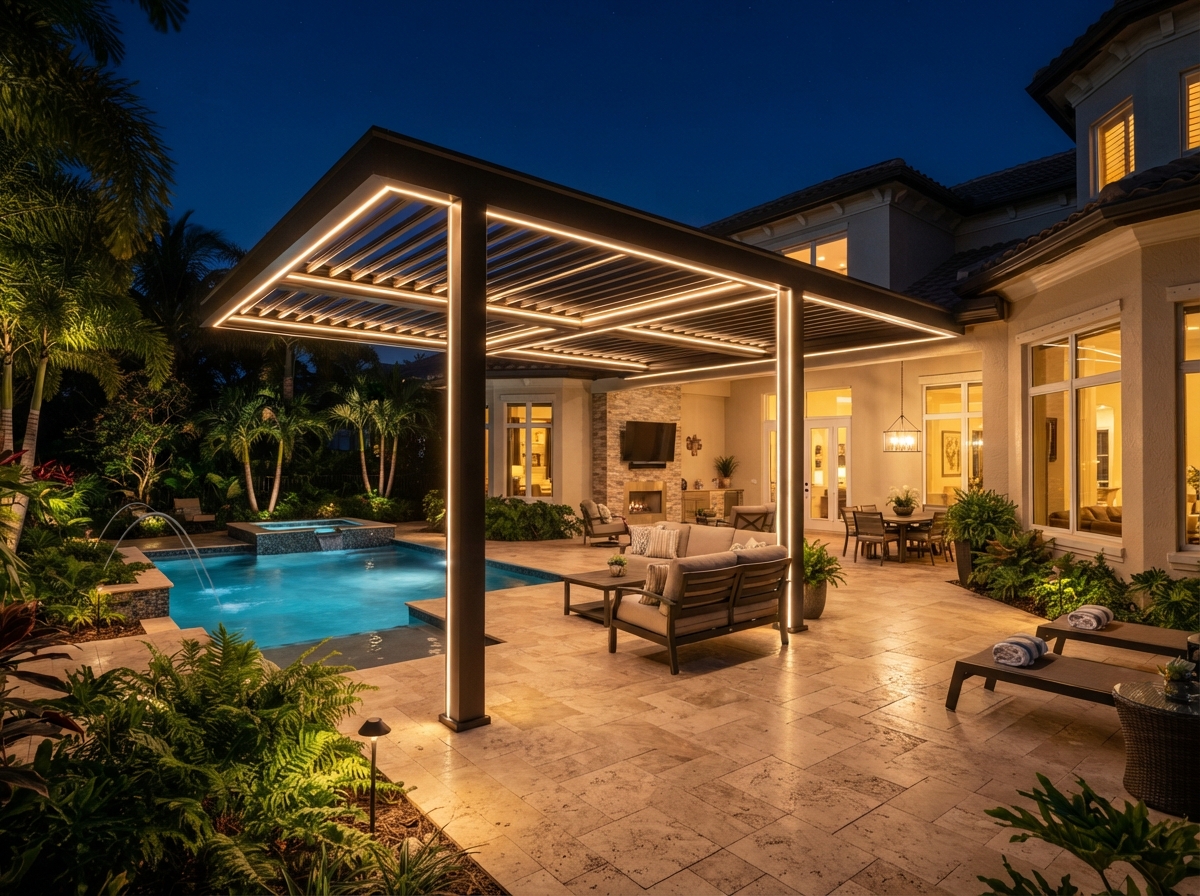
A screen enclosure transforms a patio or pool area into a comfortable, bug-free outdoor room. Prestige Aluminum Works builds screen enclosures on engineered aluminum framing, designed to integrate with our terrace and pergola systems or stand alone around pools and patios. The structural aluminum frame provides the rigidity to span large openings without sagging, while the screening keeps out insects and debris and reduces direct sun. Each enclosure is tailored to the footprint it protects, with door placement, screen type, and frame finish selected to suit the property and the way the space is used.
Benefits
Insect and Debris Protection
Fine screening keeps mosquitoes, no-see-ums, leaves, and debris out of your pool and patio area without blocking the breeze.
Open Sightlines
Aluminum framing can span wide openings with minimal mullions, preserving the view of your yard and landscape.
Structural Aluminum Frame
The rigid aluminum frame resists wind and impact better than lightweight framing and will not corrode with proper finish.
Integrated Design
Enclosures can be combined with terrace covers and pergolas so shade, shelter, and screening are designed as one system.
Reduced Sun Exposure
Screening diffuses direct sunlight, reducing glare and heat on patios and pool decks while keeping the area bright.
Custom Sizing
From a small lanai enclosure to a full pool cage, the framing is engineered to the required span and height.
Designed for Your Outdoor Space
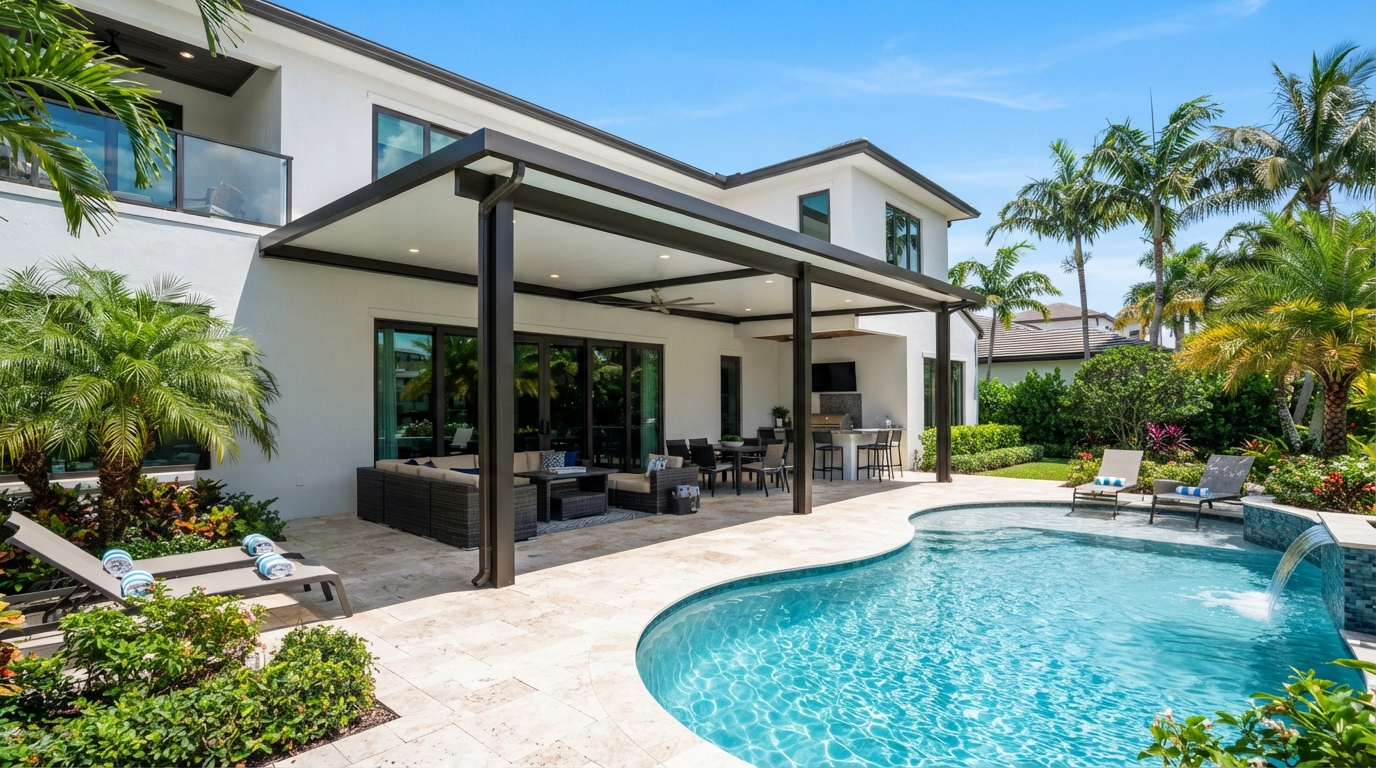
A screen enclosure is designed around the space it protects and the way that space is used. A pool enclosure needs to span the full pool deck with adequate height for comfort and for the structural requirements of the span, keeping insects and debris out of the water and the surrounding patio. A lanai or patio enclosure may be smaller but should still provide comfortable headroom and convenient access. Door placement is planned for circulation — the enclosure should allow easy entry and exit from the home and from the yard without creating bottlenecks. The enclosure can also be integrated with an overhead terrace or pergola, creating a space that is shaded, sheltered, and screened — a fully protected outdoor room. Designing these elements together ensures they coordinate structurally and visually, producing a cleaner result than retrofitting screening beneath an existing cover.
Applications
- Pool and spa enclosures
- Lanai and patio screening
- Screened outdoor dining areas
- Garden and deck enclosures
- Combined cover-and-screen systems
- Screened outdoor living rooms
Materials & Construction
- Powder-coated structural aluminum framing
- Fiberglass or polyester screen mesh
- Aluminum screen doors with hardware
- Stainless steel fasteners
- Integrated structural connectors
- Optional screen upgrades for enhanced durability
Built for Florida Outdoor Living
In Florida, a screen enclosure is one of the most practical outdoor additions a homeowner can make. The screening keeps out mosquitoes, no-see-ums, and other insects that make outdoor time uncomfortable, while still allowing airflow and preserving sightlines to the landscape. Aluminum framing is essential — it provides the structural strength to span wide openings without sagging, and it resists the corrosion that affects steel in Florida's humid, salt-laden air. The framing is engineered to meet local wind load requirements, which in Florida are not optional. Screen selection matters too: standard fiberglass mesh provides good insect protection and visibility, while upgraded options offer enhanced durability for homes with pets or heavy debris, or reduced solar heat gain for spaces in direct sun. Maintenance is minimal — periodic rinsing of the mesh, cleaning of the frame with mild soap and water, and annual inspection for tears. The aluminum frame itself requires no sealing or painting.
We install screens for homes across South and Central Florida. Explore our service areas to see whether we serve your community.
Our Process
Site Assessment
We measure the area to be enclosed, identify door and access points, and assess whether a standalone or integrated enclosure is appropriate.
Design & Engineering
We design the frame layout to the required spans, select screen type and finish, and confirm engineering for wind loads.
Frame Installation
Aluminum framing is installed and anchored, with doors and access points fitted.
Screening & Finishing
Screen mesh is installed under tension, trim is detailed, and doors are adjusted and tested.
Project Gallery
Screens: A Comprehensive Overview
A screen enclosure from Prestige Aluminum Works transforms a patio or pool area into a comfortable, bug-free outdoor room by combining engineered aluminum framing with high-quality screening to keep insects, debris, and excessive sun at bay while preserving open sightlines and airflow. In Florida, where mosquitoes, no-see-ums, and other insects can make outdoor time uncomfortable, a screen enclosure is one of the most practical outdoor additions a homeowner can make — it extends the usability of the outdoor space throughout the year without sacrificing the connection to the landscape.
Our screen enclosures are built on the same structural aluminum framing used in our terrace and pergola systems, providing the rigidity to span large openings without sagging and the corrosion resistance to perform permanently in Florida's humid, salt-laden air. The framing is engineered to meet local wind load requirements, which in Florida is not optional — it is a structural necessity. Each enclosure is tailored to the footprint it protects, with door placement, screen type, and frame finish selected to suit the property and the way the space is used.
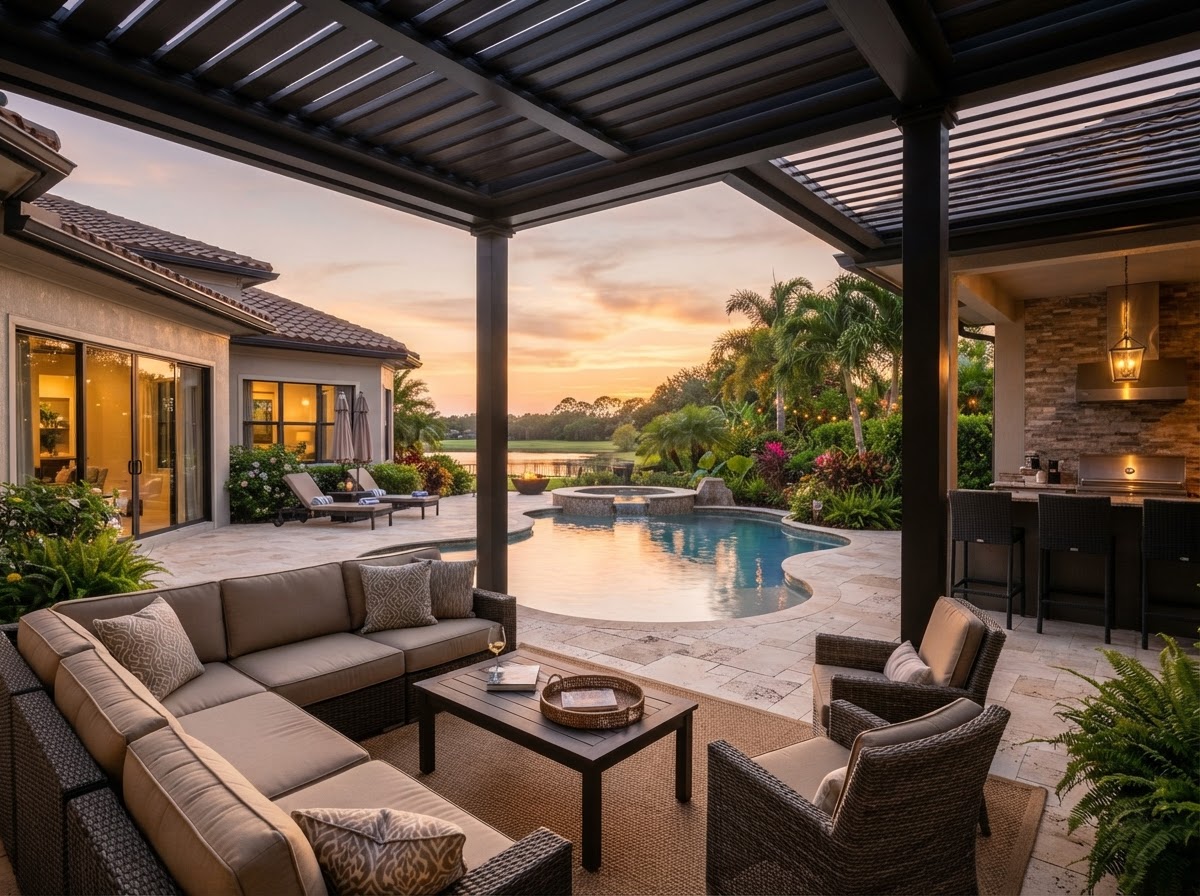
Screen enclosures can be designed as standalone structures — enclosing a pool, patio, or lanai — or integrated with our terrace and pergola systems to create a space that is shaded, sheltered, and screened simultaneously. This integration is a significant advantage: designing the cover and the screening together ensures they coordinate structurally and visually, producing a cleaner result than retrofitting screening beneath an existing cover. A fully integrated enclosure creates what is essentially an outdoor room — protected from sun, rain, and insects — that functions as a true extension of the home's living space.
For Florida homeowners, a screen enclosure is an investment in outdoor comfort and usability. It makes the pool area usable without the annoyance of insects and debris, extends the patio season throughout the year, and creates a comfortable outdoor space for dining, lounging, and entertaining. And because it is built from aluminum framing and quality screening, it delivers that comfort for years with minimal maintenance.
Design Considerations & Customization
A screen enclosure is designed around the space it protects and the way that space is used. A pool enclosure needs to span the full pool deck with adequate height for comfort and for the structural requirements of the span, keeping insects and debris out of the water and the surrounding patio. A lanai or patio enclosure may be smaller but should still provide comfortable headroom and convenient access. The design must account for the specific dimensions, orientation, and usage patterns of each space.
Door placement is planned for circulation — the enclosure should allow easy entry and exit from the home and from the yard without creating bottlenecks. Screen doors are positioned based on traffic flow, with hardware selected for durability and ease of use. For pool enclosures, access to the pool equipment and the yard is planned into the layout. For patio and lanai enclosures, the connection to the home and the landscape is the primary circulation consideration.
The enclosure can be integrated with an overhead terrace or pergola, creating a space that is shaded, sheltered, and screened — a fully protected outdoor room. Designing these elements together ensures they coordinate structurally and visually, producing a cleaner result than retrofitting screening beneath an existing cover. The structural connections between the cover and the screen frame are engineered as part of the system, eliminating the compromises and visual inconsistencies that come with separate installations.
Screen type selection affects both performance and visibility. Standard fiberglass mesh provides good insect protection and visibility for most applications. Upgraded options include enhanced durability screens for homes with pets or heavy debris, and reduced solar heat gain screens for spaces in direct sun that benefit from additional shading. The screen type is selected based on the location, the exposure, and the homeowner's priorities — insect protection, durability, or solar management.
Material Science & Construction Methodology
The structural foundation of every screen enclosure is powder-coated structural aluminum framing. Aluminum is the material of choice for screen enclosures in Florida for the same reasons it is the material of choice for our terraces and pergolas: it provides the structural strength to span wide openings without sagging, it resists the corrosion that affects steel in Florida's humid, salt-laden air, and it requires no sealing or painting to maintain its performance and appearance.
Powder coating provides the finish that gives the aluminum frame its long-term color and durability. The process bonds a durable finish to the metal surface at a molecular level, creating a surface that resists UV fading, scratching, and corrosion. This is fundamentally different from paint, which sits on the surface and is subject to chipping, peeling, and UV degradation. Powder-coated finishes are available in white, bronze, black, and other colors to complement the home's exterior and the surrounding structures.
Screen mesh is selected based on the application. Standard fiberglass mesh provides good insect protection and visibility, allowing airflow while blocking mosquitoes, no-see-ums, and debris. Polyester mesh offers enhanced durability for homes with pets or in areas with heavy debris. Solar screening reduces direct sun exposure, lowering the temperature beneath the enclosure and reducing glare — a valuable feature for screens in direct sun exposure. Each mesh type has different visibility, airflow, and durability characteristics that are matched to the application during the design phase.
Connection hardware throughout the enclosure is stainless steel, selected for its corrosion resistance. In coastal areas, where salt air accelerates the degradation of standard hardware, stainless steel is a structural necessity. Every bolt, bracket, and anchor in the enclosure is specified for the environment in which it will be installed, ensuring that the structural connections remain sound for the life of the enclosure.
Florida Climate Performance
In Florida, a screen enclosure is one of the most practical outdoor additions a homeowner can make. The screening keeps out mosquitoes, no-see-ums, and other insects that make outdoor time uncomfortable, while still allowing airflow and preserving sightlines to the landscape. For homes near canals, lakes, or in low-lying areas where insect pressure is particularly intense, a screen enclosure can transform an otherwise unusable outdoor space into a comfortable, year-round living area.
Aluminum framing is essential for screen enclosures in this climate. It provides the structural strength to span wide openings without sagging — a critical requirement for pool enclosures that must cover large areas at significant heights. It resists the corrosion that affects steel in Florida's humid, salt-laden air, maintaining its structural integrity and appearance for decades. And it requires no sealing or painting, making it a maintenance-free structural material.
The framing is engineered to meet local wind load requirements, which in Florida are not optional. The structural engineering accounts for the open area of the screening, the height and span of the enclosure, and the wind zone in which the property is located. Posts, beams, and connections are all specified to perform under the wind forces the enclosure will encounter. This engineering is documented and verified before fabrication begins.
Screen selection matters for climate performance. Standard fiberglass mesh provides good insect protection and visibility, allowing airflow while blocking insects and debris. For homes in direct sun, solar screening can reduce the temperature beneath the enclosure by diffusing direct sunlight, making the space more comfortable during peak hours. For homes with pets or in areas with heavy debris from trees, upgraded mesh provides enhanced durability and a longer service life. The screen type is selected based on the specific climate conditions and usage patterns of each property.
Maintenance & Longevity
Maintenance of a screen enclosure is minimal and straightforward. The aluminum frame requires no sealing, painting, or coating — it is a maintenance-free structural material. Periodic cleaning with mild soap and water is all that is needed to keep the frame looking its best. The powder-coated finish is durable and will not degrade with normal cleaning.
Screen mesh should be rinsed periodically to remove dust, pollen, and debris that can accumulate on the surface. A gentle spray with a garden hose is typically sufficient — no pressure washing or harsh chemicals are needed, which could damage the mesh. An annual visual inspection is recommended to check for tears or damage that could allow insects to enter.
If the screen mesh is damaged — by a pet, a falling branch, or other impact — it can be replaced without removing the aluminum frame. We use standard attachment methods that allow straightforward rescreening, making repairs a simple, cost-effective process. The aluminum frame itself is permanent and will not need replacement.
The long-term economics of an aluminum screen enclosure favor this material over alternatives. Steel framing will corrode in Florida's climate, requiring maintenance and eventual replacement. Wood framing will rot and attract termites. Aluminum is the material that will perform permanently in this environment, making it the most economical choice over the life of the enclosure despite a potentially higher initial cost.
Comparing Your Options
When evaluating screen enclosure options, Florida homeowners typically compare aluminum framing against steel and wood. Each material has distinct performance characteristics that become clear when evaluated against the demands of Florida's climate.
Steel framing has the strength to span large openings but is subject to corrosion in Florida's humid, salt-laden air. Even galvanized steel will eventually rust, particularly in coastal areas, and the structural integrity of the enclosure depends on the integrity of the frame. Steel also requires maintenance — painting or coating to protect against corrosion — and will eventually need replacement as the corrosion progresses.
Wood framing has aesthetic appeal but is fundamentally unsuited to Florida's climate as a structural material for screen enclosures. Wood rots, warps, and attracts termites in this environment, and the maintenance cycle — sealing, inspecting, replacing — is ongoing and expensive. Wood also lacks the dimensional stability of aluminum, meaning the frame will shift and distort over time, affecting the fit and performance of the screening.
Aluminum framing is the material that delivers permanent performance in Florida's climate. It provides the structural strength to span wide openings, resists corrosion in humid and salt-laden air, requires no maintenance, and holds its dimensional stability indefinitely. For homes in the Florida Keys, coastal Miami-Dade, or any salt-air environment, aluminum is not just a preference — it is the only material that will perform long-term.
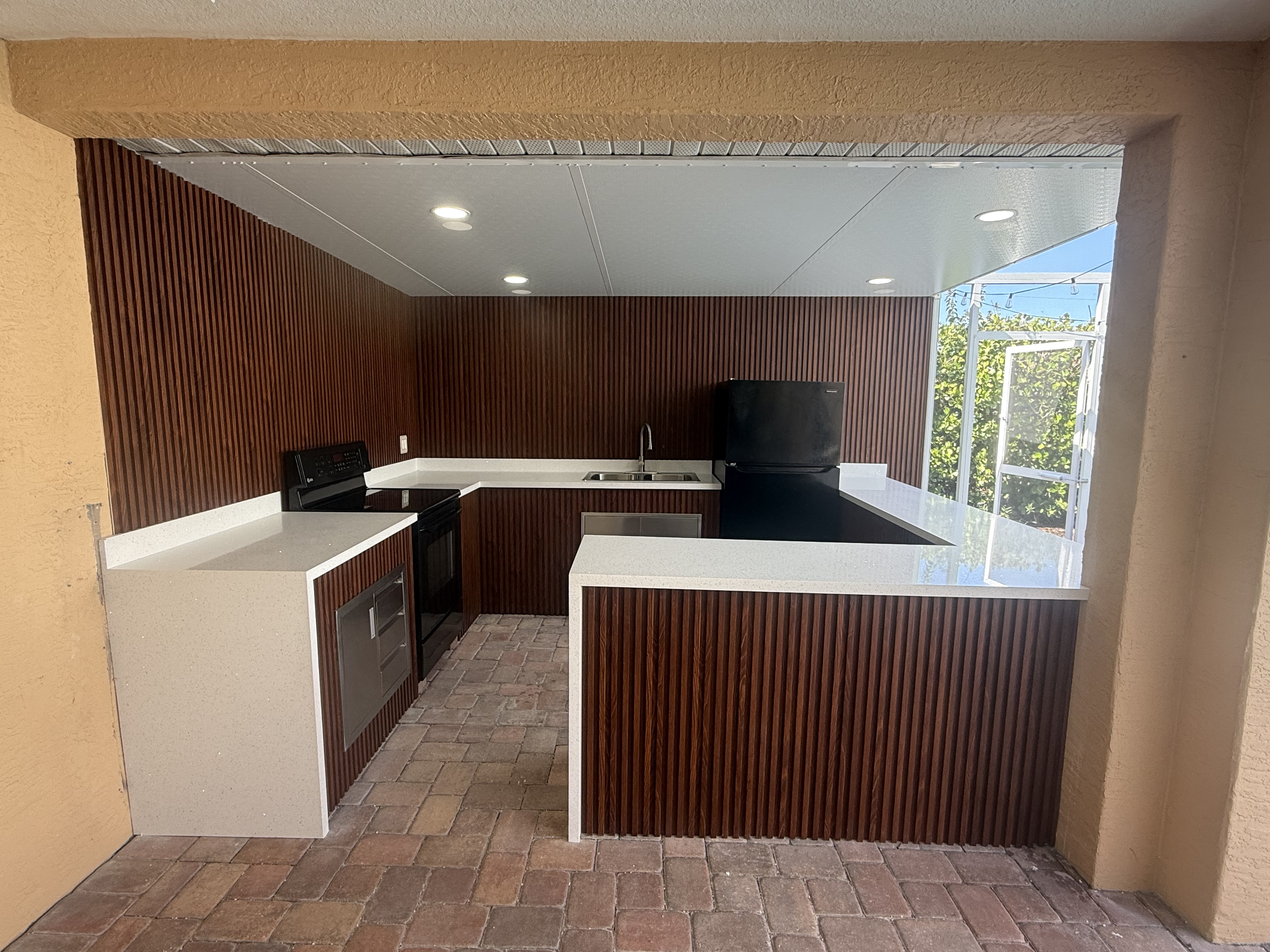
Project Planning Guide
Planning a screen enclosure project begins with a site assessment. We measure the area to be enclosed, identify door and access points, and assess whether a standalone or integrated enclosure is appropriate. For pool enclosures, the assessment includes the pool deck dimensions, the required height for comfort and structural performance, and the access points for pool equipment and the yard. For patio and lanai enclosures, the assessment includes the connection to the home, the available space, and the circulation patterns.
During the design and engineering phase, we design the frame layout to the required spans, select the screen type and finish, and confirm the engineering for wind loads. The frame layout is planned to minimize mullions and maximize open sightlines while maintaining the structural performance required for the span and height. Screen type is selected based on the application — standard mesh for general insect protection, upgraded mesh for durability or solar management.
If the enclosure is being integrated with a terrace or pergola, the design phase is when the structural connections between the cover and the screen frame are planned. Designing these elements together ensures they coordinate structurally and visually, producing a cleaner result than retrofitting screening beneath an existing cover. The integrated approach also allows the cover and screening to share structural elements, reducing the total material and installation cost.
Installation follows a sequence: aluminum framing is installed and anchored, with doors and access points fitted. Screen mesh is then installed under tension, trim is detailed, and doors are adjusted and tested. Upon completion, we walk the homeowner through the operation and care of the enclosure, explain the maintenance requirements, and verify that every door, latch, and screen panel meets expectations. The result is a screen enclosure that is ready to use, built to perform in Florida's climate, and designed to provide years of comfortable, insect-free outdoor living.
Why Choose Prestige Aluminum Works
Every screens project begins with an on-site consultation to understand your goals and assess the site. The design is then engineered to meet local wind load requirements and tailored to complement your home's architecture. Fabrication is completed to specification before installation, so the work on site is precise and efficient.
We work in aluminum because it is the material that performs in Florida. It will not warp, rot, or corrode, and it holds its finish and geometry for decades with minimal upkeep. The result is a structure that looks as good in fifteen years as it does on the day it is installed.
Related Articles
Guides
Florida Screen Enclosures: A Homeowner's Buying Guide
What to know before buying a screen enclosure in Florida — frame materials, screen types, engineering, and what to expect during installation.
Read ArticleMaintenance
Screen Enclosure Maintenance: Keeping Your Florida Enclosure in Top Condition
Simple maintenance practices that extend the life of a screen enclosure in Florida — cleaning, inspection, frame care, and when to replace mesh.
Read ArticleGuides
Screen Enclosure vs. Open Patio: Which Is Right for Your Florida Home?
A comparison of screened and open outdoor spaces in Florida — covering comfort, usability, cost, and how to decide which approach fits your lifestyle.
Read Article