Composite Wood-Look Cladding
Bring the warmth of wood to modern aluminum structures with a refined, low-maintenance finish.
Designed Around Your Home and Outdoor Lifestyle
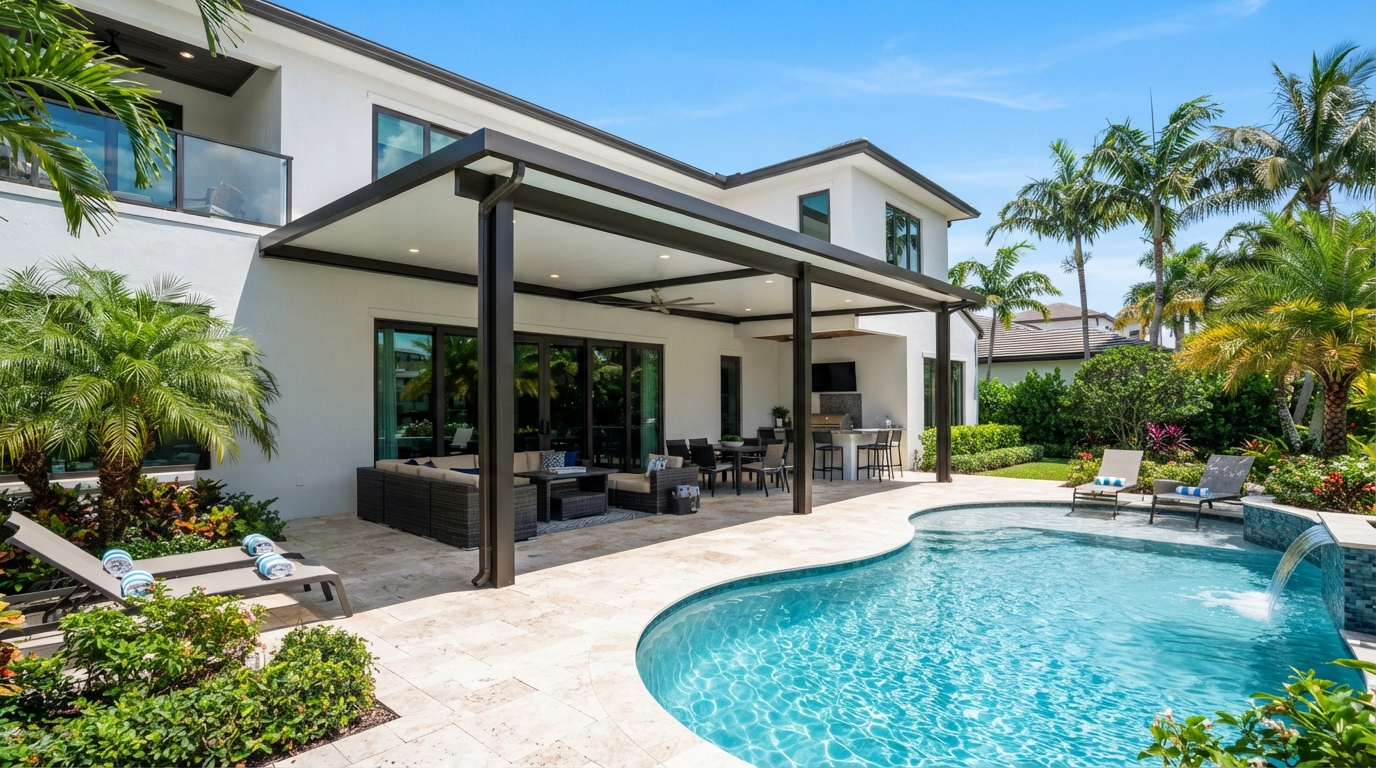
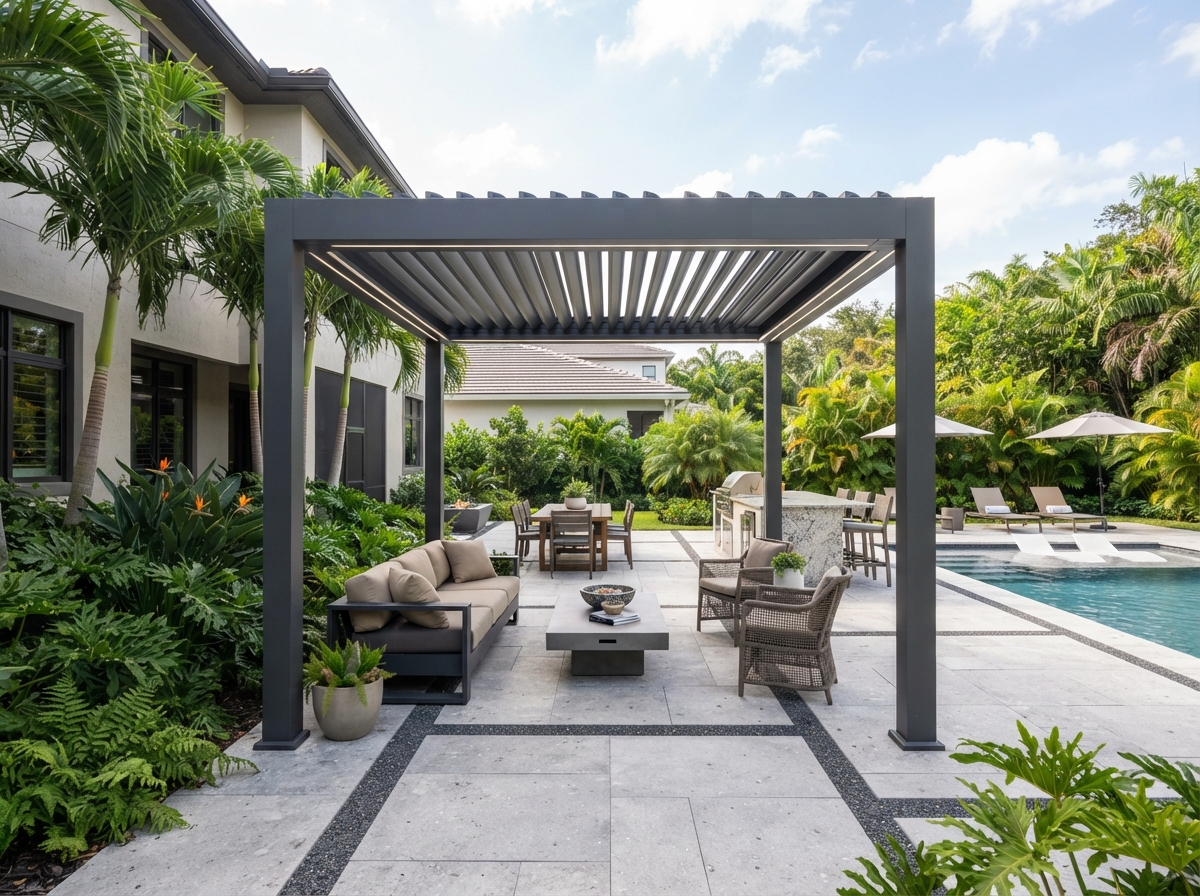
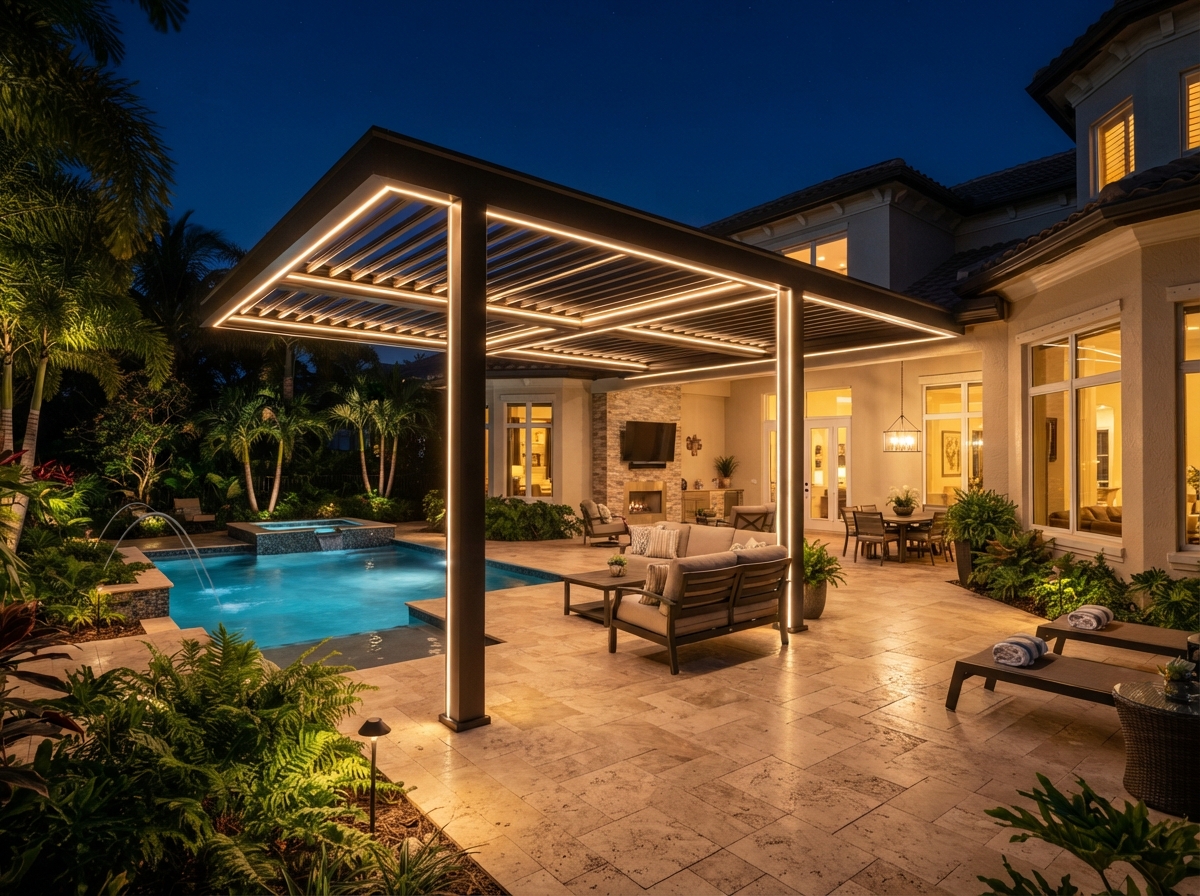
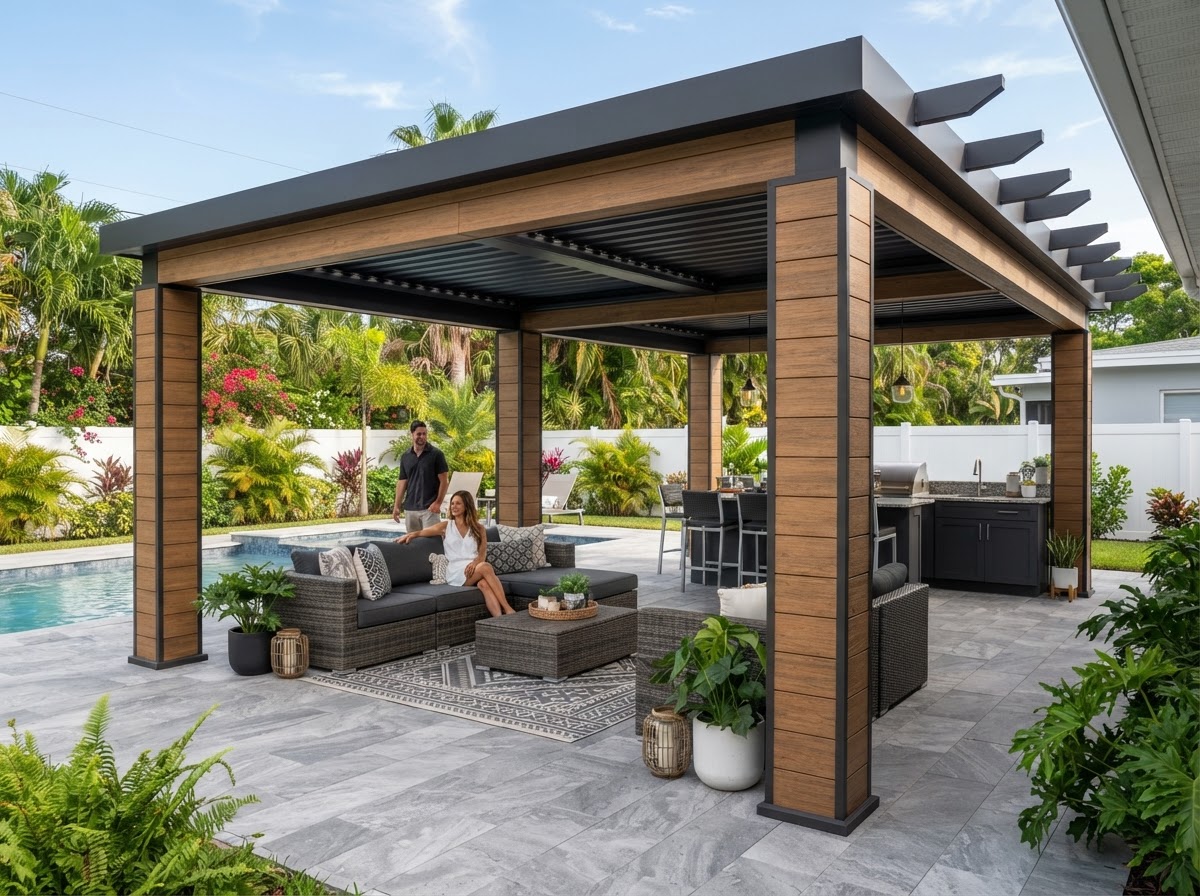
Composite wood-look cladding gives an aluminum structure the rich texture and warmth of natural timber while eliminating every drawback wood brings to Florida's climate. The material is a high-grade composite applied to structural aluminum columns, beams, and ceiling systems, delivering the visual character of wood grain without the splitting, warping, rotting, or resealing that real wood demands. Prestige Aluminum Works integrates wood-look cladding into terraces, pergolas, and outdoor kitchens to soften the clean lines of aluminum with organic warmth, creating outdoor living spaces that feel both architectural and inviting.
Benefits
Authentic Wood Appearance
Advanced composite reproduces the grain, color depth, and tactile feel of natural wood without the structural compromises.
Will Not Rot or Warp
Because the substrate is structural aluminum, the assembly will not twist, split, or degrade in humidity and rain.
No Staining or Sealing
Unlike real wood, the composite surface never needs restaining, sealing, or repainting. Periodic cleaning is sufficient.
Design Versatility
Cladding can be applied to columns, beam wraps, ceiling systems, and accent panels to introduce warmth exactly where it is wanted.
Color Stability
UV-resistant finishes retain their tone over years of sun exposure, avoiding the greying and fading that natural wood suffers.
Pest Proof
Composite and aluminum are impervious to termites and other wood-destroying organisms common in Florida.
Designed for Your Outdoor Space
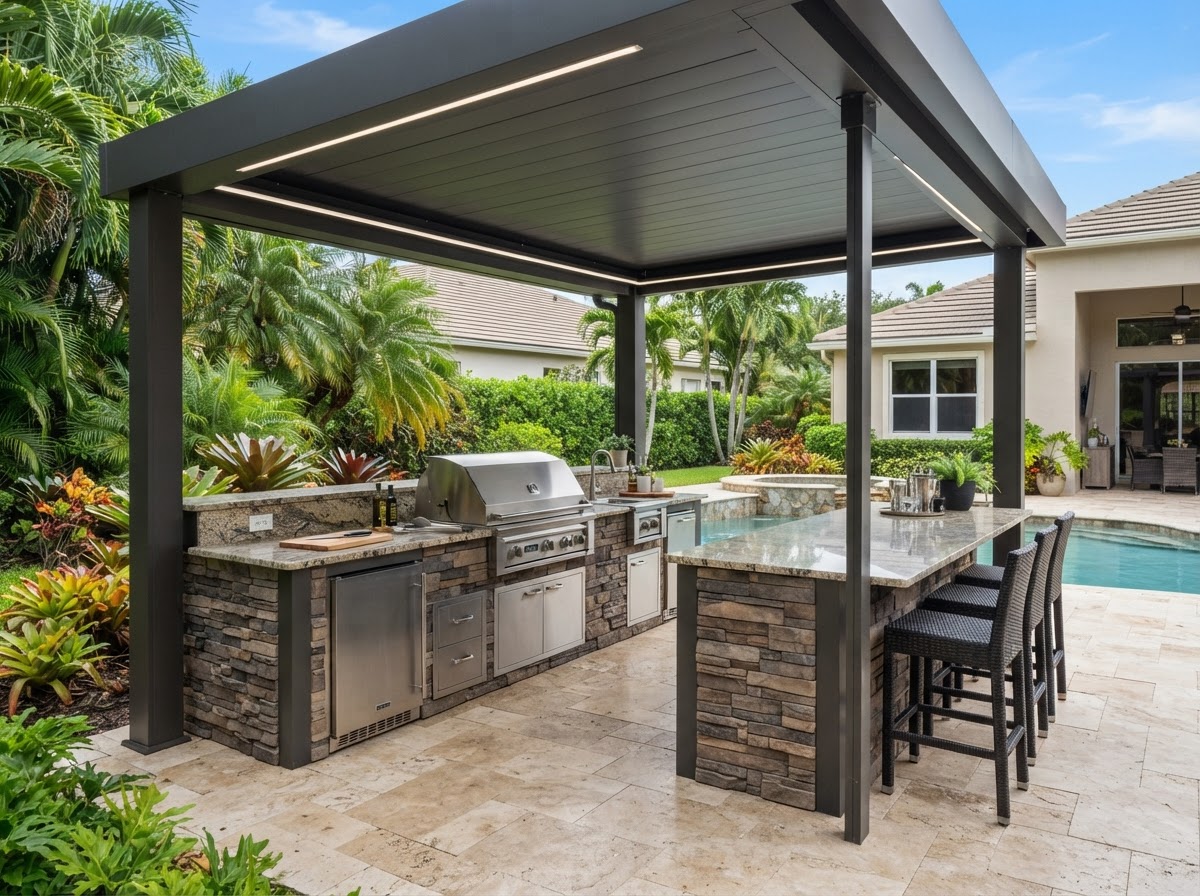
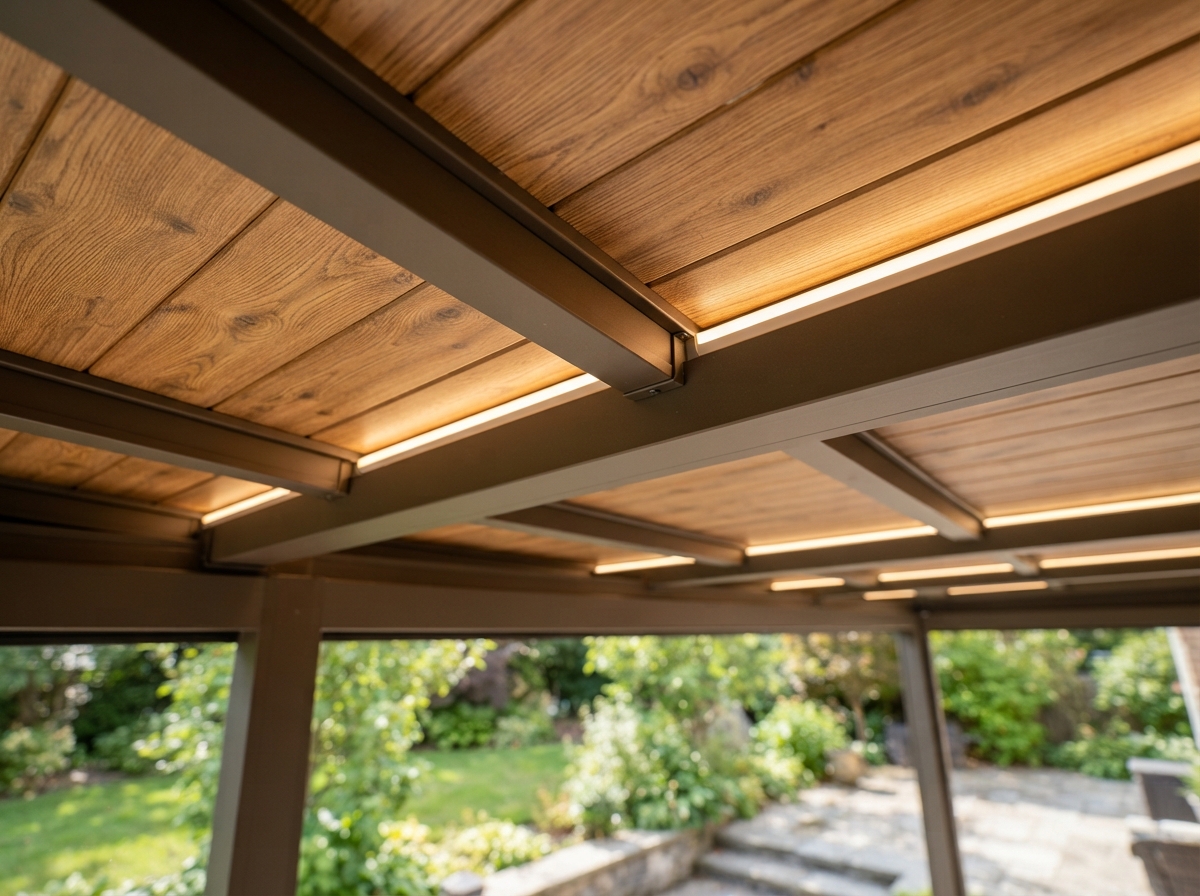
Wood-look cladding is a design tool that introduces warmth exactly where it is wanted. On a terrace, cladding the columns transforms plain aluminum posts into elements that read as timber while retaining the structural performance of metal. Cladding the beams softens the overhead structure, making a clean aluminum frame feel more inviting. A wood-grain ceiling system brings warmth to the space beneath the cover, creating an overhead surface that feels natural rather than industrial. On an outdoor kitchen, cladding can wrap the cabinetry fascia to tie the kitchen into the surrounding landscape. The application can be selective — just the columns, for instance — or more extensive, depending on the architectural character of the home and the aesthetic goals. A modern home may call for cladding as an accent; a more traditional home may benefit from broader application that helps the structure blend with its surroundings.
Applications
- Column wraps on terraces and pergolas
- Beam cladding for visual warmth
- Ceiling systems with wood-grain finish
- Outdoor kitchen fascia and accents
- Accent panels on screen enclosures
- Architectural feature walls
Materials & Construction
- High-grade composite wood-look planks
- Structural aluminum substrate framing
- Concealed fastening systems
- UV-stable finish coatings
- Matching trim and transition components
Built for Florida Outdoor Living
In Florida, the choice of cladding material matters as much as the choice of structure. Natural wood cladding in this climate demands ongoing maintenance — staining, sealing, and eventually replacement as humidity, UV, and moisture take their toll. Composite wood-look cladding eliminates that cycle. The high-grade composite is impervious to moisture, so it will not rot, swell, or split. UV-stable finishes resist the fading and greying that natural wood suffers under intense Florida sun, meaning the warm tone you see on day one holds for years. The material is also pest-proof — termites and other wood-destroying organisms common in Florida cannot damage composite or aluminum. Maintenance is limited to periodic cleaning with mild soap and water, the same care the aluminum structure itself requires. For coastal properties, the combination of aluminum substrate and composite cladding provides resistance to salt air that no wood product can match.
We install composite wood-look cladding for homes across South and Central Florida. Explore our service areas to see whether we serve your community.
Our Process
Design Integration
During the structure design phase we identify which elements — columns, beams, ceilings — will receive wood-look cladding and select the finish tone.
Substrate Preparation
The aluminum structure is installed and prepared as the cladding substrate, ensuring a true, plumb surface for the composite.
Cladding Installation
Composite planks are cut and fastened to the aluminum substrate with concealed hardware, with trim and transitions detailed.
Finishing
All joints, corners, and transitions are detailed and the completed cladding is cleaned and inspected.
Project Gallery
Composite Wood-Look Cladding: A Comprehensive Overview
Composite wood-look cladding is the material innovation that allows Prestige Aluminum Works to deliver the warmth and character of natural wood on outdoor structures without any of wood's structural or maintenance drawbacks. This high-grade composite material is applied to structural aluminum columns, beams, and ceiling systems, creating a finish that reproduces the grain, color depth, and tactile feel of natural timber while remaining impervious to the humidity, UV, and pest pressure that make real wood a poor choice for permanent outdoor structures in Florida.
The application of wood-look cladding transforms the visual character of an aluminum structure. Plain aluminum columns become elements that read as timber. Beam soffits gain the organic texture of wood grain. Ceiling systems beneath a terrace or pergola cover take on the warm, natural appearance of a wood-paneled overhead — creating an outdoor living space that feels both architectural and inviting rather than utilitarian. The result is a structure that combines the engineering performance of aluminum with the aesthetic warmth that many homeowners associate with traditional outdoor construction.
Prestige Aluminum Works integrates wood-look cladding into our aluminum terraces, aluminum pergolas, and outdoor kitchens as a design option that can be applied selectively or comprehensively. A homeowner may choose to clad only the columns for a subtle accent, or to clad columns, beams, and ceilings for a more immersive wood aesthetic. The cladding is designed into the structure during the planning phase, ensuring that it is integrated with rather than applied to the structure — producing a cohesive, intentional result rather than a retrofit appearance.
For homeowners in South and Central Florida who want the look of wood without the maintenance burden, composite wood-look cladding on structural aluminum is the solution that delivers both aesthetics and performance. It is available in a range of tones from warm cedar to deeper walnut, allowing the finish to be selected in relation to the home's exterior and the surrounding landscape. And because the substrate is aluminum, the assembly will not rot, warp, split, or attract termites — the structural integrity and appearance are permanent.

Design Considerations & Customization
Wood-look cladding is a design tool that introduces warmth exactly where it is wanted. The application can be selective — cladding only the columns, for instance, to transform plain aluminum posts into elements that read as timber while retaining the clean aluminum beam structure overhead. Or it can be more comprehensive, covering columns, beams, and ceiling systems to create a fully wood-toned environment beneath the cover. The architectural character of the home and the aesthetic goals of the homeowner drive these decisions.
On an aluminum terrace, cladding the columns is the most common application. It transforms the visual character of the structure from purely architectural to warm and organic, helping the terrace blend with homes that feature wood elements in their exterior construction. Cladding the beams softens the overhead structure, making the aluminum frame feel more inviting. A wood-grain ceiling system brings warmth to the space beneath the cover, creating an overhead surface that feels natural rather than industrial.
On an outdoor kitchen, cladding can wrap the cabinetry fascia to tie the kitchen into the surrounding landscape. The warm wood tones of the cladding complement stone counters and stainless steel appliances, creating a cohesive material palette that feels intentional and designed. On a screen enclosure, cladding can be applied to the structural columns to soften the appearance of the aluminum frame and help the enclosure blend with the architecture of the home.
Tone selection is an important design decision. Warm cedar tones complement homes with lighter exteriors and create a bright, natural aesthetic. Deeper walnut tones work well with darker exteriors and create a richer, more dramatic appearance. The tone is selected in relation to the home's exterior colors, the surrounding landscape, and the overall design vision for the outdoor space. During the design phase, we provide samples and guidance to help homeowners select the finish that best achieves their aesthetic goals.
Material Science & Construction Methodology
The composite material used in wood-look cladding is a high-grade formulation engineered specifically for permanent outdoor exposure. Unlike vinyl or low-grade composites that degrade under UV and moisture, this material is designed to maintain its appearance and structural integrity in the conditions that define Florida's climate — sustained high humidity, intense UV exposure, heavy rainfall, and salt-laden air in coastal locations.
The manufacturing process reproduces wood grain, color variation, and texture with a fidelity that is convincing to both sight and touch. Advanced molding and texturing techniques create a surface that replicates the natural variation of wood grain, including the subtle color shifts and tactile feel that distinguish real timber from imitations. Most observers cannot distinguish a well-installed composite cladding from natural wood until told otherwise.
The substrate — the structural aluminum beneath the cladding — is what gives the assembly its permanent performance. The cladding is a finish layer, not a structural element. The structural integrity comes from the aluminum framing, which will not rot, warp, or degrade. The cladding is fastened to the aluminum substrate with concealed hardware, creating a stable, permanent bond that will not loosen or separate over time. This separation of structure and finish is the key to the system's longevity — the structure performs structurally, and the cladding performs aesthetically, and neither compromises the other.
UV-stable finish coatings are integrated into the composite material during manufacturing, providing resistance to the fading and greying that natural wood suffers under intense sun exposure. This means the warm tone selected on day one holds for years — a claim that cannot be made for stained natural wood, which requires periodic reapplication to maintain its color. The composite is also impervious to moisture — it will not absorb water, swell, split, or rot, eliminating the primary mechanism by which wood degrades in Florida's climate.

Florida Climate Performance
In Florida, the choice of cladding material matters as much as the choice of structure. Natural wood cladding in this climate demands ongoing maintenance — staining, sealing, and eventually replacement as humidity, UV, and moisture take their toll. Composite wood-look cladding eliminates that cycle entirely, providing the aesthetic of wood with the climate performance of a material engineered for permanent outdoor exposure.
The composite is impervious to moisture, so it will not rot, swell, or split — the primary mechanisms by which wood degrades in Florida's high-humidity environment. This moisture resistance is not a coating or treatment that can wear away; it is an inherent property of the material. The cladding will maintain its dimensional stability and appearance regardless of the humidity or rainfall it encounters.
UV-stable finishes resist the fading and greying that natural wood suffers under intense Florida sun. Natural wood exposed to UV requires periodic re-staining to maintain its color — a maintenance cycle that is both costly and never-ending. Composite cladding's UV resistance is integrated into the material during manufacturing, meaning the warm tone you see on day one holds for years without any intervention.
The material is also pest-proof. Termites and other wood-destroying organisms common in Florida cannot damage composite or aluminum. This is a significant advantage over natural wood, which in Florida is not a question of whether termites will find it but when. For coastal properties, the combination of aluminum substrate and composite cladding provides resistance to salt air that no wood product can match — neither material will corrode or degrade in the salt-laden environment that characterizes coastal South Florida and the Florida Keys.
Maintenance & Longevity
The maintenance advantage of composite wood-look cladding over natural wood is one of its most compelling attributes. Natural wood cladding in Florida requires staining and sealing every one to two years to maintain its appearance and protect it from moisture and UV damage. Over time, even with diligent maintenance, wood will show signs of degradation — checking, splitting, and greying that eventually require replacement. Composite cladding eliminates this entire maintenance cycle.
Routine care is limited to periodic cleaning with mild soap and water to remove dust, pollen, and environmental deposits. A soft brush or cloth is sufficient — no harsh chemicals, pressure washing, or abrasive cleaners are needed. The surface is durable enough to withstand normal cleaning without damage, and the UV-stable finish will not degrade or fade with exposure to the elements.
No sealing, staining, painting, or coating is ever required. The color and texture are integrated into the material during manufacturing, meaning they are permanent properties rather than applied finishes that can wear away. This is a fundamental difference from natural wood, where the finish is a maintenance item that must be periodically renewed.
The long-term economics favor composite cladding over natural wood. While the initial material cost may be comparable to or slightly higher than premium wood, the elimination of maintenance — staining materials, labor, and the eventual replacement of degraded wood — makes composite the more economical choice over the life of the structure. Combined with the structural aluminum substrate, the assembly delivers decades of performance and beauty with minimal upkeep.
Comparing Your Options
When evaluating cladding options for outdoor structures in Florida, homeowners typically compare composite wood-look cladding against natural wood and vinyl. Each material has distinct performance characteristics that become clear when evaluated against the demands of Florida's climate.
Natural wood has authentic aesthetic appeal but is fundamentally unsuited to Florida's climate as a permanent outdoor finish. The humidity, rainfall, and UV exposure cause wood to warp, split, rot, and attract termites. The maintenance cycle — staining, sealing, and eventual replacement — is ongoing, expensive, and never-ending. Even with diligent care, wood in this climate will degrade over time, and the appearance that looked good on installation day will deteriorate.
Vinyl cladding offers low maintenance but lacks the aesthetic quality and material performance of high-grade composite. Vinyl can become brittle and chalky with UV exposure, and it cannot reproduce the texture and color depth of natural wood with the fidelity that composite achieves. Vinyl is also more susceptible to impact damage and does not have the structural rigidity of composite on an aluminum substrate.
Composite wood-look cladding on structural aluminum is the solution that delivers the aesthetic of wood with the performance of engineered materials. The composite reproduces the grain, color, and texture of natural wood convincingly, while the aluminum substrate provides permanent structural performance. The combination eliminates every drawback of wood — rot, warp, termites, maintenance — while preserving the warmth and character that make wood an appealing choice for outdoor living spaces.
Project Planning Guide
Planning a project that includes wood-look cladding begins with identifying which elements of the structure will receive the cladding. During the design integration phase, we work with the homeowner to determine whether cladding will be applied to columns only, to columns and beams, or to columns, beams, and ceiling systems. This decision is driven by the architectural character of the home and the aesthetic goals for the outdoor space.
Tone selection is the next step. We provide samples of the available finishes — from warm cedar to deeper walnut — and help the homeowner select the tone that best complements the home's exterior and the surrounding landscape. The tone should be selected in natural light, as the appearance of the cladding changes with lighting conditions, and in relation to the other materials in the outdoor space, including the frame color, counter surfaces, and landscape elements.
The cladding is designed into the structure during the planning phase, not applied as an afterthought. This means the aluminum substrate is prepared to receive the cladding during fabrication, with mounting points and concealed fastening systems integrated into the frame. This integrated approach produces a cleaner, more intentional result than retrofitting cladding to an existing structure.
Installation follows the structure installation. Once the aluminum frame is in place and prepared as the cladding substrate, the composite planks are cut and fastened to the substrate with concealed hardware. Trim and transition components are detailed, and all joints, corners, and edges are finished to produce a seamless, professional appearance. Upon completion, the cladding is cleaned and inspected, and the homeowner is walked through the care and maintenance requirements — which, as with all our aluminum-based systems, are minimal.
Why Choose Prestige Aluminum Works
Every composite wood-look cladding project begins with an on-site consultation to understand your goals and assess the site. The design is then engineered to meet local wind load requirements and tailored to complement your home's architecture. Fabrication is completed to specification before installation, so the work on site is precise and efficient.
We work in aluminum because it is the material that performs in Florida. It will not warp, rot, or corrode, and it holds its finish and geometry for decades with minimal upkeep. The result is a structure that looks as good in fifteen years as it does on the day it is installed.
Related Articles
Materials
Composite Wood-Look Cladding: The Warmth of Wood Without the Maintenance
How composite wood-look cladding brings the character of natural wood to aluminum structures while eliminating the maintenance wood demands.
Read ArticleMaterials
Composite Wood-Look Cladding vs. Natural Wood: A Florida Comparison
How composite wood-look cladding compares to natural wood for outdoor structures in Florida — covering appearance, durability, maintenance, and cost.
Read ArticleDesign
Where to Use Wood-Look Cladding in Your Outdoor Structure
From column wraps to ceiling systems — a practical guide to the applications of composite wood-look cladding in aluminum outdoor structures.
Read Article