Composite Wood-Look Cladding
Composite Wood-Look Cladding: The Warmth of Wood Without the Maintenance
Many homeowners are drawn to the warmth and character of natural wood but are reluctant to accept the maintenance it demands in Florida's climate. Composite wood-look cladding offers a solution that delivers the visual appeal of wood while retaining the durability and low maintenance of aluminum. This article explains what wood-look cladding is, where it is applied, and why it has become a popular choice for premium outdoor structures.
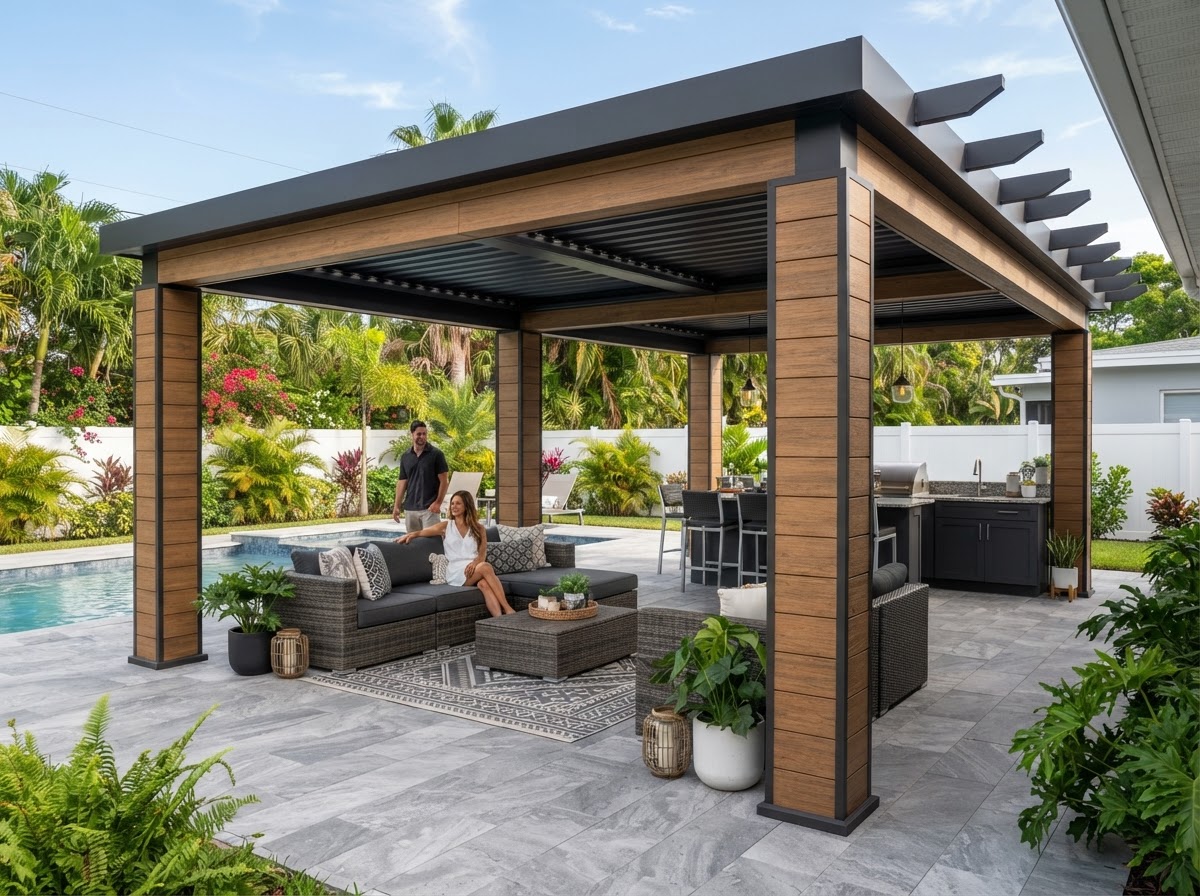
Composite wood-look cladding is a high-grade composite material designed to reproduce the appearance of natural wood grain. It is applied as a finish layer over structural aluminum — wrapping columns, cladding beams, and covering ceiling systems. The result is a structure that has the structural performance and durability of aluminum with the visual warmth and texture of wood. To the eye, and often to the touch, the cladding reads as wood. If you're considering composite wood-look cladding for your Florida home, our team can help you explore the options.
The composite itself is engineered for outdoor performance. Unlike natural wood, it will not rot, warp, split, or attract insects. It is impervious to the humidity and moisture that degrade wood in Florida, and its UV-stable finishes resist the fading and greying that natural wood suffers under intense sun. This means the warm, wood-grain appearance the homeowner sees on day one is the same appearance they will see years later — without the staining, sealing, and refinishing that real wood requires.
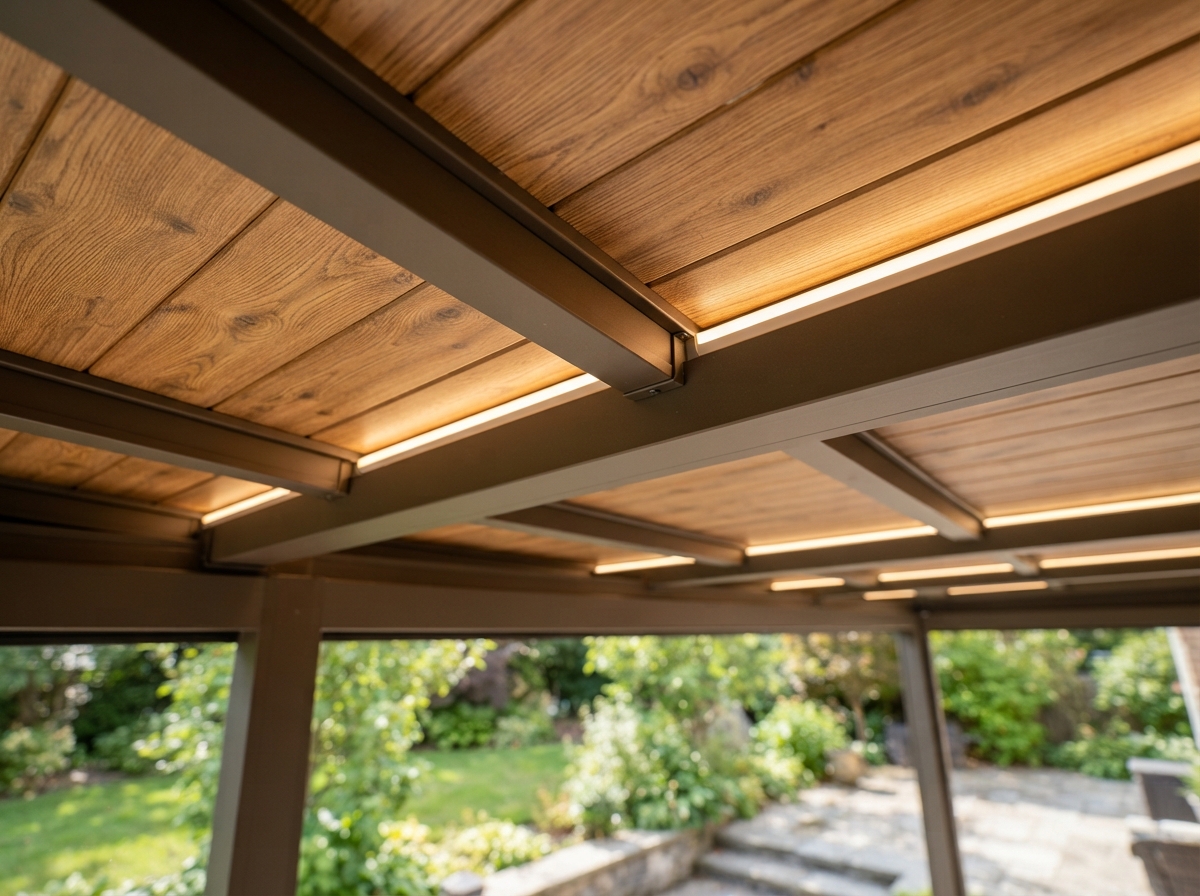
The applications of wood-look cladding are varied. Column wraps are the most common — transforming plain aluminum posts into elements that read as wood while retaining the structural properties of aluminum. Beam cladding applies the same treatment to overhead beams, softening the clean lines of aluminum with organic texture. Ceiling systems can be finished in wood-grain composite, creating an overhead surface that brings warmth to the covered space below. Accent panels on screen enclosures or outdoor kitchens can introduce wood character exactly where it is wanted.
The design flexibility of cladding is one of its strengths. It can be used selectively — on columns only, for example — to introduce warmth without overwhelming the clean architectural character of the structure. Or it can be applied more extensively for a structure that reads predominantly as wood. The choice depends on the aesthetic goals and the architecture of the home. A modern home may call for selective cladding as an accent; a more traditional home may benefit from more extensive application.
The installation process integrates cladding with the structure's construction. The aluminum structure is installed first, providing the structural substrate. The composite cladding is then cut and fastened to the aluminum with concealed hardware, with trim and transitions detailed to produce a finished appearance. Because the cladding is a finish layer applied over the structural substrate, it does not affect the engineering of the structure — the structural integrity comes entirely from the aluminum beneath.
Maintenance of wood-look cladding is minimal, matching the low upkeep of the aluminum structure itself. The composite surface is cleaned with mild soap and water — no sealing, staining, or refinishing. Periodic inspection for any impact damage is prudent, and any damaged sections can be addressed to maintain the appearance. The UV-stable finish retains its color over years of sun exposure, avoiding the greying that natural wood would show in the same period.
For homeowners who want the character of wood in their outdoor structures without accepting the maintenance burden, composite wood-look cladding is the solution. It pairs the structural and durability advantages of aluminum with the visual warmth of wood, producing structures that are both architectural and inviting. In Florida's climate, where wood is a high-maintenance choice, cladding offers the aesthetic without the obligation. For more on this topic, read our guide on Composite Wood-Look Cladding vs. Natural Wood: A Florida Comparison.
Frequently Asked Questions
Learn About This Service
The warmth of natural wood with the durability of aluminum — composite wood-look cladding brings organic texture to columns, beams, and ceilings without the maintenance.
Composite Wood-Look CladdingMore Articles
Materials
Composite Wood-Look Cladding vs. Natural Wood: A Florida Comparison
How composite wood-look cladding compares to natural wood for outdoor structures in Florida — covering appearance, durability, maintenance, and cost.
Read ArticleDesign
Where to Use Wood-Look Cladding in Your Outdoor Structure
From column wraps to ceiling systems — a practical guide to the applications of composite wood-look cladding in aluminum outdoor structures.
Read ArticleMaterials
Aluminum vs. Wood Patio Covers: Which Material Wins in Florida?
A practical comparison of aluminum and wood for Florida patio covers — covering durability, maintenance, cost of ownership, and climate performance.
Read Article