Composite Wood-Look Cladding
Where to Use Wood-Look Cladding in Your Outdoor Structure
Composite wood-look cladding is one of the most versatile design tools available for premium outdoor structures. It brings the warmth and texture of natural wood to the clean lines of aluminum framing, allowing homeowners to soften the industrial character of metal with organic, inviting finishes. But where exactly should cladding be applied, and how does each application affect the look and feel of the structure? This guide explores the key applications of wood-look cladding in aluminum outdoor structures.
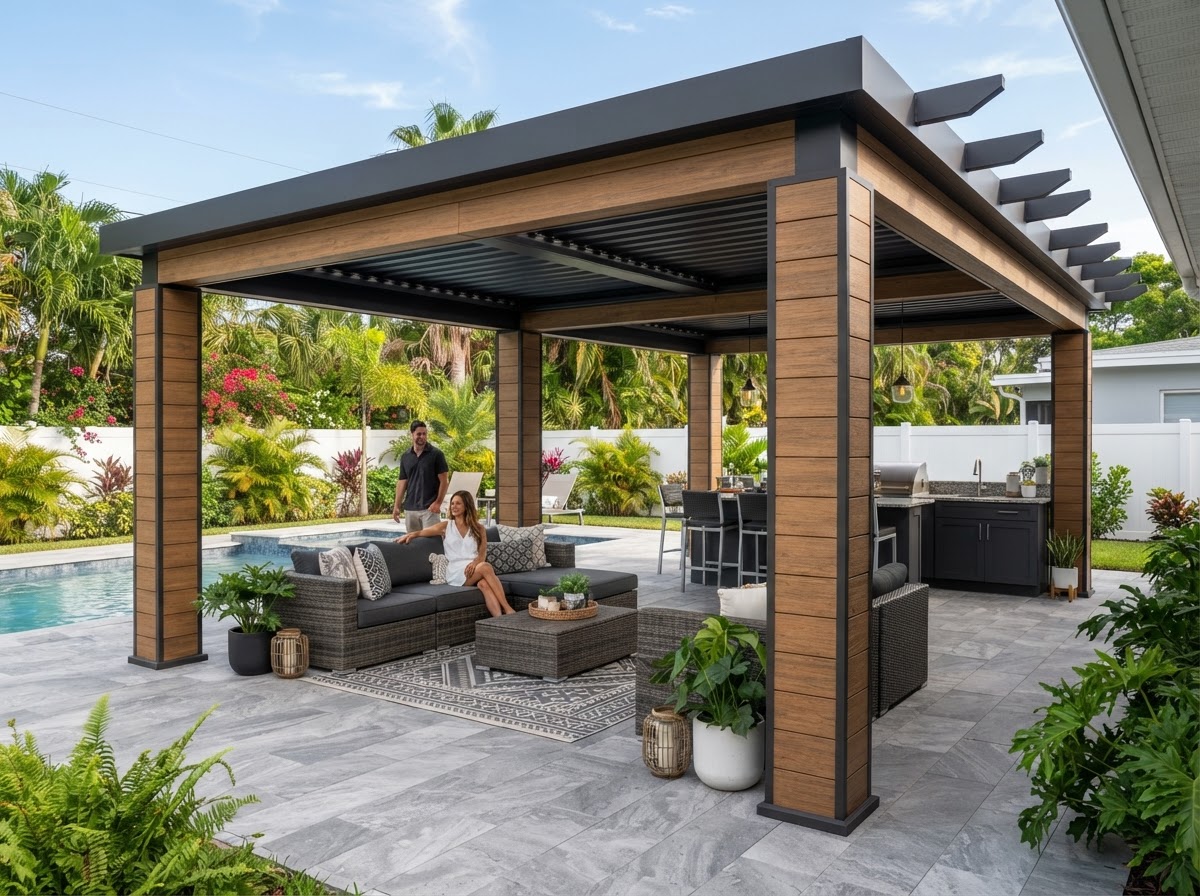
Column wraps are the most common and impactful application. An aluminum support post is a structural necessity, but a plain metal column can feel cold and industrial. Wrapping the column in composite wood-look cladding transforms it into an element that reads as timber, bringing warmth and architectural character to the structure. The cladding is applied over the aluminum substrate, so the structural performance of the post is unchanged — the aluminum provides the strength, and the composite provides the appearance. Column wraps are particularly effective on terraces and pergolas where the columns are prominent visual elements. If you're considering composite wood-look cladding for your Florida home, our team can help you explore the options.
Beam cladding extends the same treatment to the overhead structure. The beams that support the roof are visible from beneath, and cladding them in wood-look composite softens the overhead plane, creating a warmer, more inviting space. This is especially effective on covered patios and terraces where people spend time beneath the structure. The wood-grain overhead adds character that a plain aluminum beam cannot provide, making the space feel more like a designed outdoor room than a functional shelter.
Ceiling systems are where wood-look cladding has the most transformative effect. The ceiling of a covered structure is the surface directly above the living space, and its finish has an outsized impact on the character of the area beneath. A standard white aluminum ceiling is clean and bright, reflecting light and feeling open. A wood-look ceiling, by contrast, brings warmth and texture overhead, creating a more intimate, inviting atmosphere. For homeowners who want their covered patio or terrace to feel like a true extension of the home's interior, a wood-grain ceiling is one of the most effective design choices available.
Outdoor kitchen applications tie the kitchen into its surroundings. Cladding can be applied to the cabinetry fascia, wrapping the kitchen's base in wood-grain composite that complements the surrounding landscape. This is particularly effective when the kitchen is set in a garden or near trees, where the wood-look finish creates a visual connection between the built structure and the natural environment. The cladding is durable enough for the kitchen environment — it will not be damaged by heat, humidity, or the occasional splatter, and it cleans easily with soap and water.
Accent panels on screen enclosures offer a selective application. The framing of a screen enclosure is primarily aluminum, but accent panels of wood-look cladding can be introduced at key points — around the door, at the base, or at the corners — to add warmth without cladding the entire frame. This selective approach allows the homeowner to introduce wood character where it has the most visual impact, while keeping the overall enclosure light and open. It is a design choice that can tie the enclosure into the architecture of the home or the surrounding landscape.
Architectural feature walls are a more extensive application. In some outdoor living designs, a section of wall — perhaps the wall of the home that the patio adjoins, or a freestanding privacy wall — is clad in wood-look composite to create a feature element that anchors the space. This application uses cladding as a primary design element rather than an accent, creating a surface that defines the character of the entire area. The durability of the composite makes it suitable for this purpose, as it will maintain its appearance for years without the maintenance that a real wood feature wall would demand.
The design flexibility of cladding is one of its greatest strengths. It can be used selectively — just the columns, for example — to introduce warmth as an accent, or more extensively for a structure that reads predominantly as wood. The choice depends on the aesthetic goals and the architecture of the home. A modern home with clean lines may call for cladding as a subtle accent; a more traditional home may benefit from broader application that helps the outdoor structure blend with the home's character. The cladding is available in a range of tones, from warm cedar to deeper walnut, allowing the finish to be matched to the home's exterior and the surrounding landscape.
The application of wood-look cladding is planned during the design phase of the structure. The aluminum structure is installed first, providing the structural substrate. The composite cladding is then cut and fastened to the aluminum with concealed hardware, with trim and transitions detailed to produce a finished appearance. Because the cladding is a finish layer, it does not affect the engineering of the structure — the structural integrity comes entirely from the aluminum beneath. This means cladding can be added to a new structure during construction or, in many cases, retrofitted to an existing aluminum structure. The result is a structure that combines the durability and performance of aluminum with the warmth and character of wood — the best of both materials, without the maintenance burden that real wood demands in Florida's climate. For more on this topic, read our guide on Composite Wood-Look Cladding: The Warmth of Wood Without the Maintenance.
Frequently Asked Questions
Learn About This Service
The warmth of natural wood with the durability of aluminum — composite wood-look cladding brings organic texture to columns, beams, and ceilings without the maintenance.
Composite Wood-Look CladdingMore Articles
Materials
Composite Wood-Look Cladding: The Warmth of Wood Without the Maintenance
How composite wood-look cladding brings the character of natural wood to aluminum structures while eliminating the maintenance wood demands.
Read Article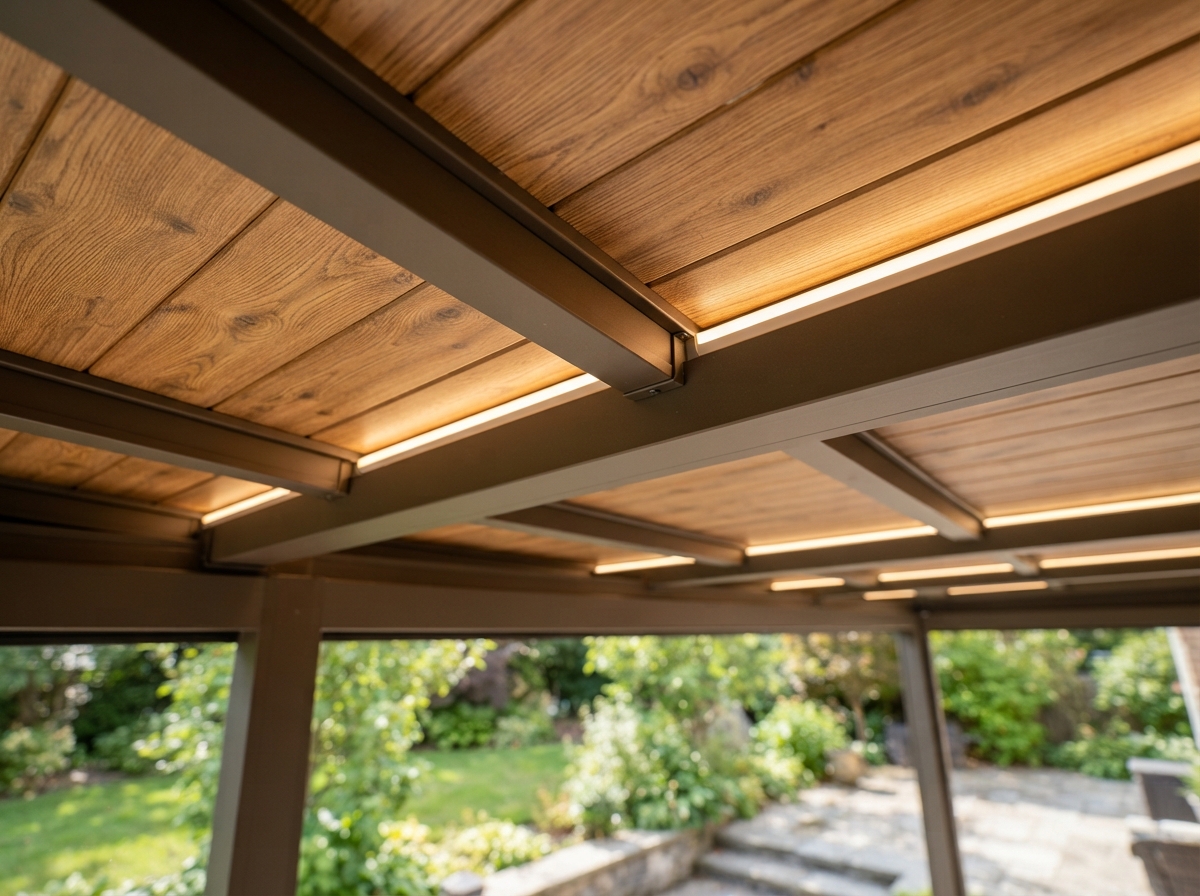
Materials
Composite Wood-Look Cladding vs. Natural Wood: A Florida Comparison
How composite wood-look cladding compares to natural wood for outdoor structures in Florida — covering appearance, durability, maintenance, and cost.
Read ArticleMaterials
Aluminum vs. Wood Patio Covers: Which Material Wins in Florida?
A practical comparison of aluminum and wood for Florida patio covers — covering durability, maintenance, cost of ownership, and climate performance.
Read Article