Composite Wood-Look Cladding
Composite Wood-Look Cladding vs. Natural Wood: A Florida Comparison
Many homeowners are drawn to the warmth and character of natural wood for their outdoor structures, but Florida's climate makes wood a demanding choice. Composite wood-look cladding has emerged as a compelling alternative that delivers the visual appeal of wood without the maintenance burden. This article compares the two materials across the factors that matter most in Florida: appearance, durability, maintenance, and cost of ownership.
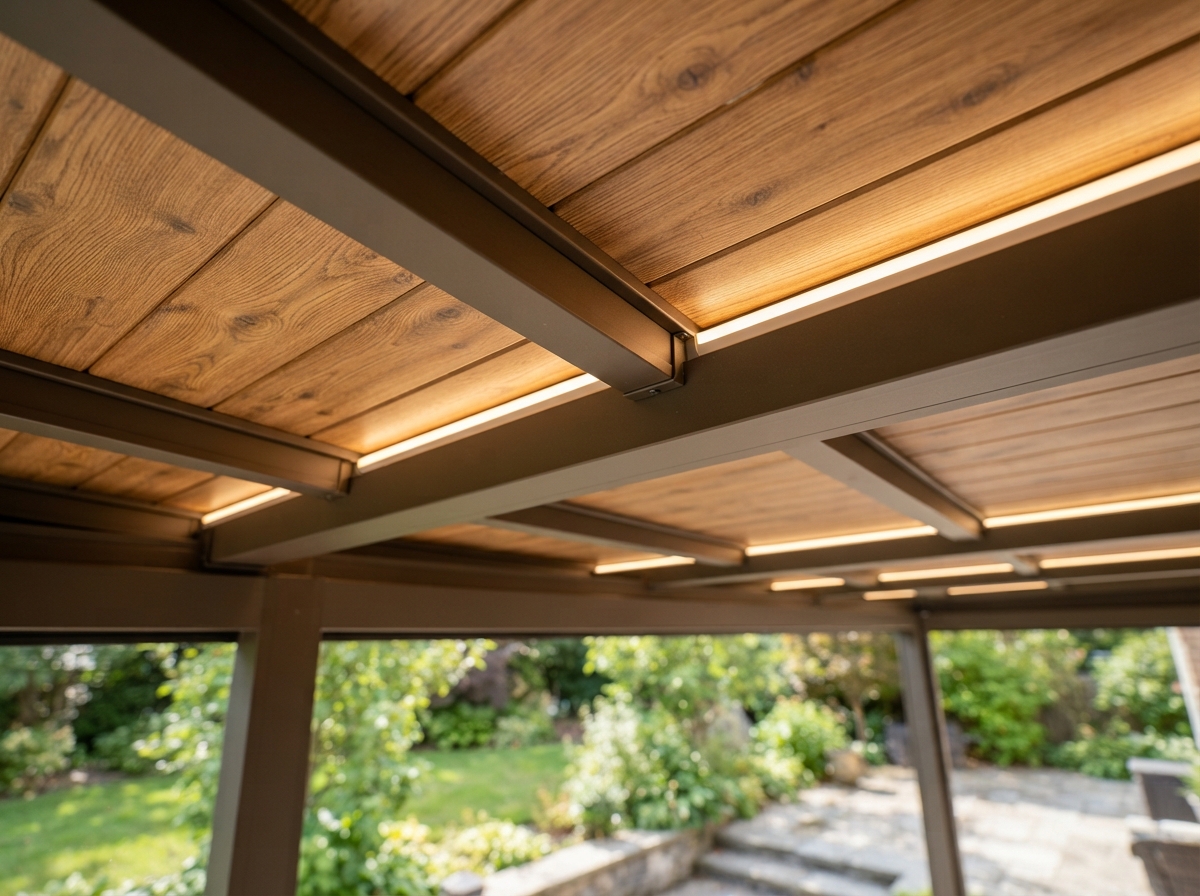
In appearance, the gap between natural wood and composite cladding has narrowed significantly. Modern high-grade composites reproduce the grain, color variation, and texture of natural wood with convincing fidelity. To the eye, and often to the touch, a well-installed composite cladding reads as wood. Natural wood has a warmth and variation that comes from the natural growth of the tree, and purists may still prefer it, but for most homeowners the composite is visually indistinguishable from wood at normal viewing distances. The composite is available in a range of tones, from warm cedar to deeper walnut, allowing the finish to be matched to the home's aesthetic. If you're considering composite wood-look cladding for your Florida home, our team can help you explore the options.
Durability is where the comparison diverges sharply in Florida. Natural wood in this climate is under constant assault from humidity, UV, rain, and insects. Wood absorbs moisture, which causes it to swell, warp, and eventually rot. UV exposure breaks down the surface, causing fading and greying. Termites and other wood-destroying organisms are active year-round in Florida's warm climate. A wood structure in this environment requires ongoing maintenance to combat these forces, and even with diligent care, the structural integrity declines over time.
Composite wood-look cladding, applied over structural aluminum, eliminates these vulnerabilities. The composite material does not absorb moisture, so it cannot rot, swell, or warp. UV-stable finishes resist the fading and greying that natural wood suffers under intense sun. The composite and aluminum substrate are impervious to termites and other wood-destroying organisms. The result is a material that maintains its appearance and structural integrity for years without the degradation that wood experiences in the same conditions.
Maintenance is the area where the difference is most dramatic. Natural wood in Florida requires sealing or staining every one to two years to protect it from moisture and UV. Each cycle costs money and time, and the wood is vulnerable to damage during the periods between maintenance. Wood may also need board replacement as individual boards warp, split, or rot. Composite cladding requires none of this. Periodic cleaning with mild soap and water is the only maintenance needed. There is no sealing, no staining, no board replacement, and no pest treatment. The maintenance savings over the life of the structure are substantial.
Cost of ownership tells the full story. Natural wood may have a lower initial material cost, but the total cost of ownership — factoring in the recurring maintenance labor and materials, and the eventual need for replacement — typically exceeds that of composite cladding. The composite's higher upfront investment is recovered through the elimination of maintenance costs and the longevity of the material. When the cladding is applied over structural aluminum, the structure itself also benefits from aluminum's durability, creating a system that outperforms wood on every measure of longevity.
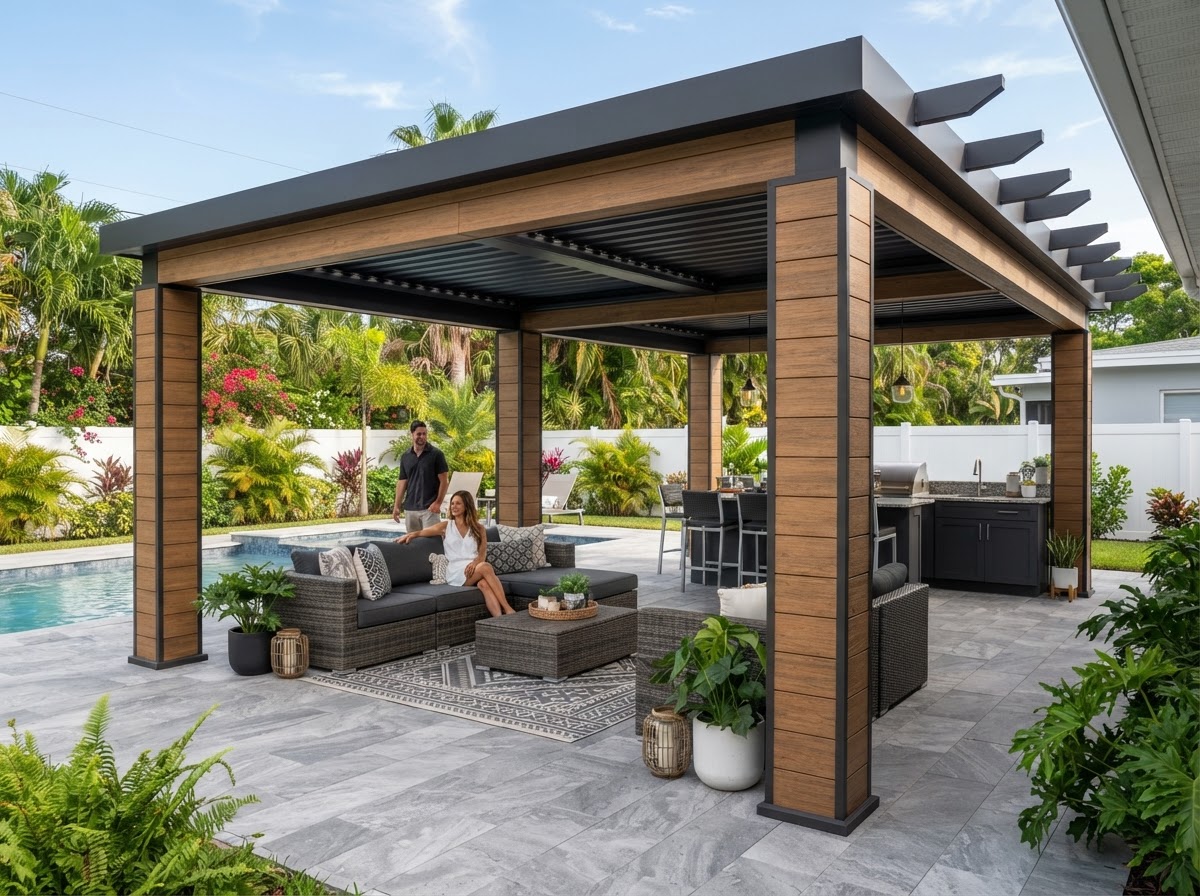
The structural consideration is important. Natural wood can be a structural material — posts, beams, and rafters can be wood. Composite cladding is not structural; it is a finish layer applied over a structural substrate, typically aluminum. This means that a structure with composite cladding gets its strength from the aluminum frame, which is superior to wood in durability and dimensional stability, while getting its visual character from the composite. The combination is, in a sense, the best of both worlds: the structural performance of aluminum and the visual warmth of wood.
For Florida homeowners, the comparison is clear. Natural wood offers authentic character but demands significant, ongoing maintenance in this climate, and its structural integrity declines over time. Composite wood-look cladding delivers the visual appeal of wood with none of the maintenance, applied over a structural aluminum frame that outperforms wood in every measure of durability. For most homeowners building a structure meant to last, the composite is the rational choice — the aesthetic of wood without the obligation. For more on this topic, read our guide on Composite Wood-Look Cladding: The Warmth of Wood Without the Maintenance.
Frequently Asked Questions
Learn About This Service
The warmth of natural wood with the durability of aluminum — composite wood-look cladding brings organic texture to columns, beams, and ceilings without the maintenance.
Composite Wood-Look CladdingMore Articles
Materials
Composite Wood-Look Cladding: The Warmth of Wood Without the Maintenance
How composite wood-look cladding brings the character of natural wood to aluminum structures while eliminating the maintenance wood demands.
Read ArticleDesign
Where to Use Wood-Look Cladding in Your Outdoor Structure
From column wraps to ceiling systems — a practical guide to the applications of composite wood-look cladding in aluminum outdoor structures.
Read ArticleMaterials
Aluminum vs. Wood Patio Covers: Which Material Wins in Florida?
A practical comparison of aluminum and wood for Florida patio covers — covering durability, maintenance, cost of ownership, and climate performance.
Read Article