Screens
Screen Enclosure vs. Open Patio: Which Is Right for Your Florida Home?
One of the first decisions Florida homeowners face when planning an outdoor living space is whether to screen it or leave it open. Both approaches have their advantages, and the right choice depends on how you use the space, your tolerance for insects and debris, and your budget. This article compares screened and open outdoor spaces to help you make an informed decision.
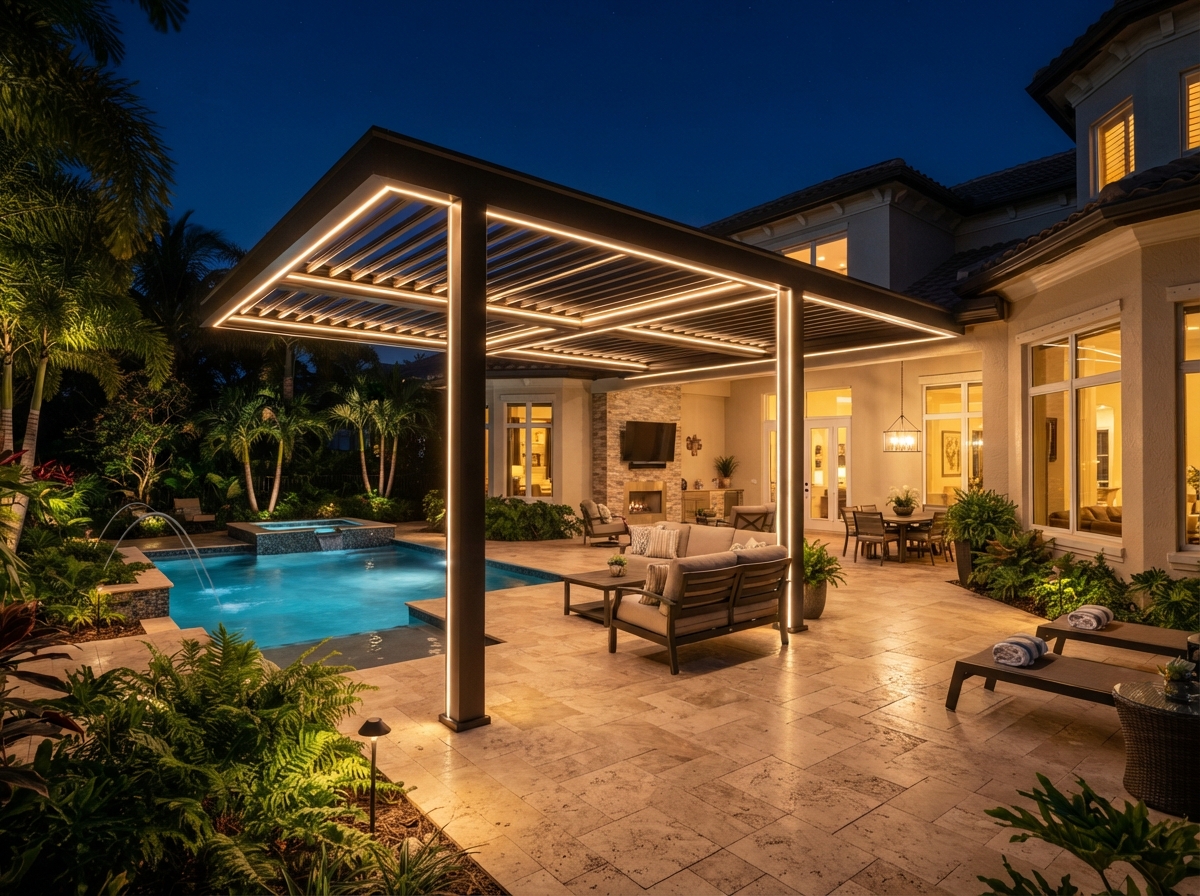
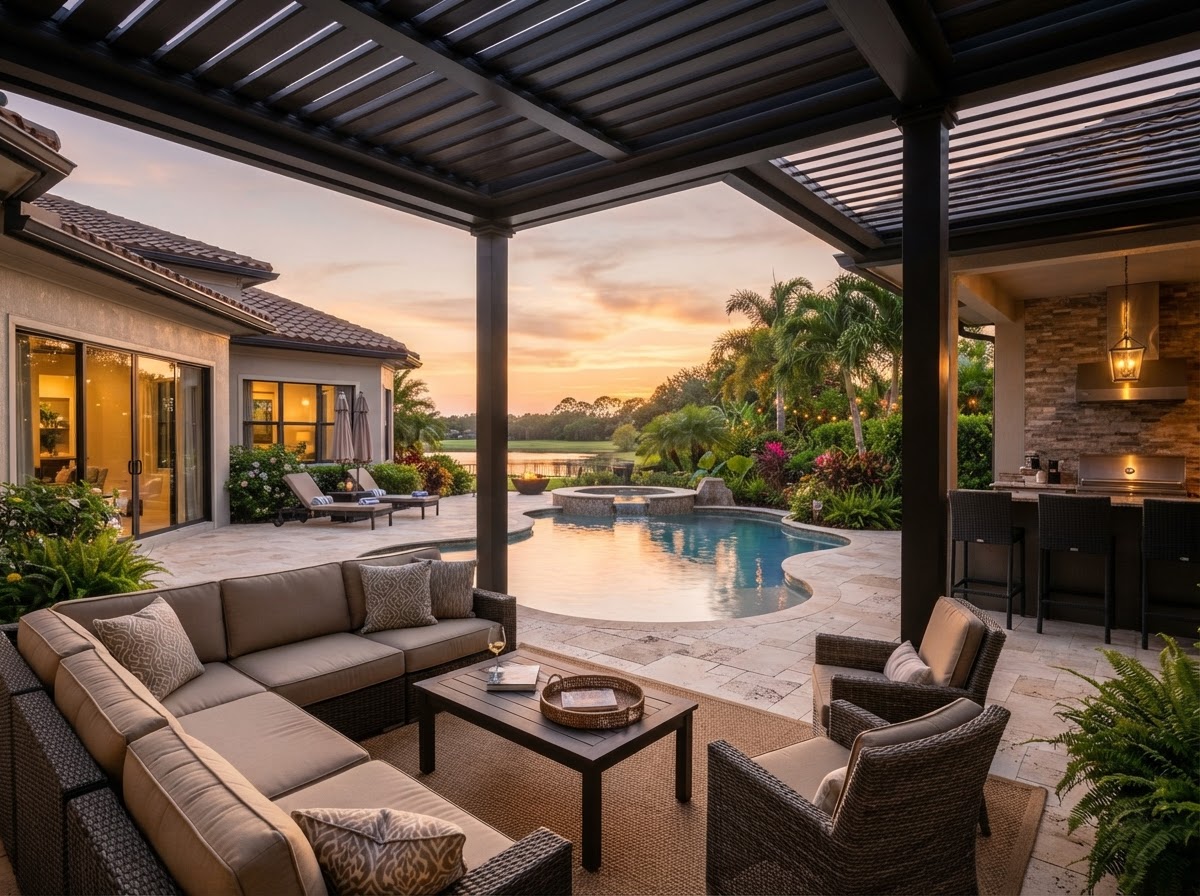
The open patio is the simpler, more traditional approach. An open patio — whether covered by a terrace or pergola or left uncovered — provides a direct connection to the landscape and the sky. There is no mesh between you and the view, no framework enclosing the space, and no barrier to airflow. For homeowners who value the feeling of being fully outdoors and who are not significantly bothered by insects, an open patio is a straightforward and often less expensive option. The trade-off is that insects, debris, and direct sun are all unfiltered. If you're considering screens for your Florida home, our team can help you explore the options.
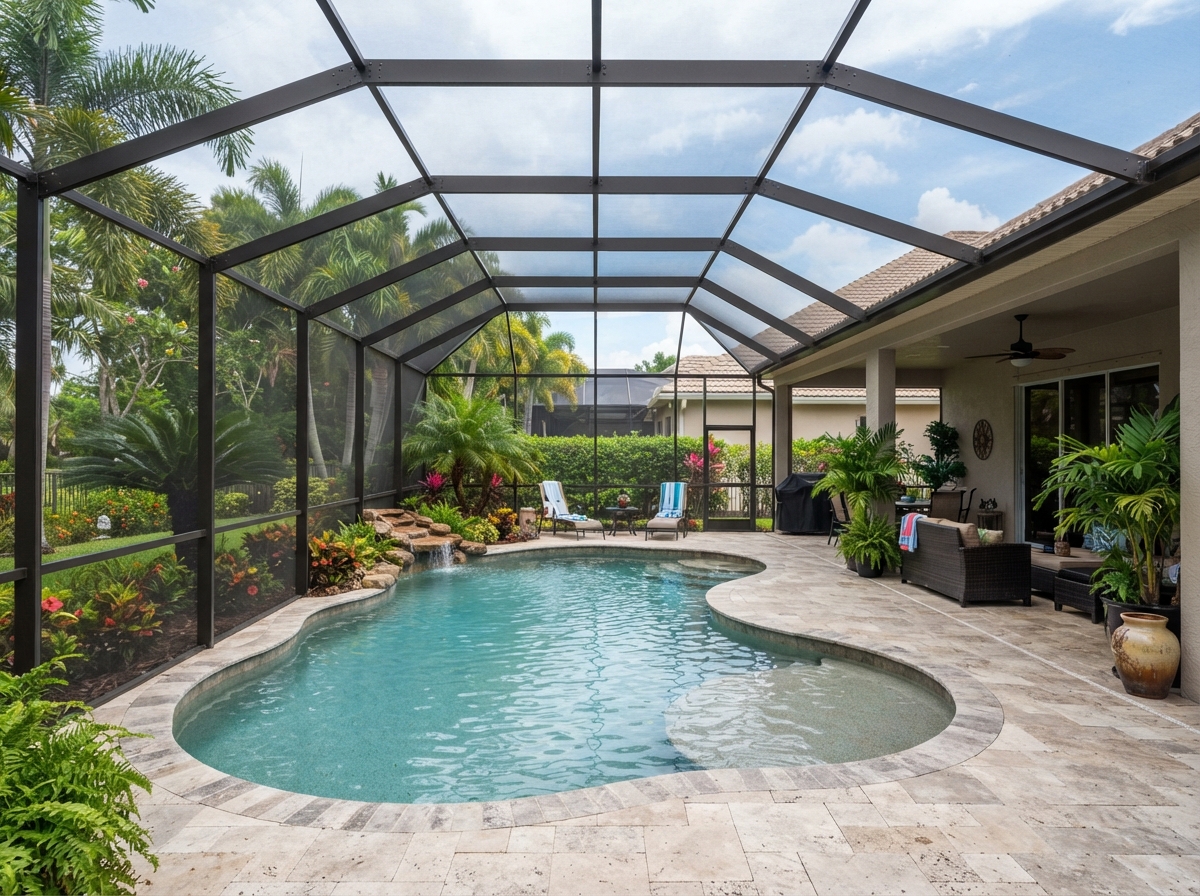
The screen enclosure addresses the challenges that an open patio does not. Florida is home to mosquitoes, no-see-ums, and other insects that can make outdoor time uncomfortable, particularly during dawn and dusk and in the warmer months. A screen enclosure keeps these insects out while preserving airflow and sightlines, transforming a patio or pool area into a comfortable, usable outdoor room. It also keeps leaves, grass clippings, and other debris out of the pool and off the patio, reducing cleaning. For many Florida homeowners, the insect protection alone justifies the enclosure.
Comfort is the primary difference in practice. An open patio may be unusable during peak mosquito hours, while a screened space is comfortable throughout the day and evening. A screened enclosure also diffuses direct sunlight slightly, reducing glare and heat without making the space dark. The result is a space that is usable for more hours of the day, more days of the year — a significant increase in the practical value of the outdoor area.
Cost is a factor. A screen enclosure adds to the cost of an outdoor project because it requires additional framing, mesh, doors, and labor. However, the enclosure can be integrated with an overhead structure — a terrace or pergola — so that the framing serves double duty, supporting both the roof and the screening. Designing the cover and the enclosure together is more cost-effective than building them separately, and it produces a cleaner, more coordinated result. For homeowners on a budget, an open patio with a cover can be a starting point, with screening added later if insect pressure proves to be a problem.
The visual character of the two approaches differs. An open patio feels more expansive and connected to the landscape, with no visual barrier between the covered space and the yard. A screen enclosure defines the space more clearly, creating a distinct outdoor room. The framing of the enclosure — the aluminum posts and mullions — is a visual element, though modern aluminum framing can span wide openings with minimal mullions, preserving the view. For some homeowners, the architectural definition of an enclosure is a positive; for others, the openness of an uncovered view is preferred.
Maintenance differs as well. An open patio with an aluminum cover requires only cleaning of the structure. A screen enclosure adds the mesh as a maintenance element — periodic rinsing, inspection for tears, and occasional panel replacement. The aluminum frame of the enclosure requires the same minimal care as any aluminum structure. The additional maintenance of the mesh is modest but not zero, and it should be factored into the decision.
A hybrid approach is also possible. A covered patio can be partially screened — screening the dining or seating area while leaving the cooking zone open, for example. Or an enclosure can be designed with removable panels that allow the space to be opened up during seasons when insect pressure is lower. These options provide flexibility for homeowners who want some of the benefits of both approaches.
The right choice depends on your lifestyle and priorities. If insects are a significant nuisance and you want to maximize the usable hours of your outdoor space, a screen enclosure is the clear choice. If you value the open, unencumbered feeling of a direct connection to the landscape and insects are not a major concern, an open patio may be the better fit. Many Florida homeowners ultimately choose the enclosure, finding that the comfort and usability it provides far outweigh the additional cost. But the decision is a personal one, and it should be made with a clear understanding of the trade-offs. For more on this topic, read our guide on Florida Screen Enclosures: A Homeowner's Buying Guide.
Frequently Asked Questions
Learn About This Service
Custom aluminum screen enclosures that keep insects, debris, and sun at bay while preserving open sightlines and airflow around your pool, patio, or outdoor living area.
ScreensMore Articles
Guides
Florida Screen Enclosures: A Homeowner's Buying Guide
What to know before buying a screen enclosure in Florida — frame materials, screen types, engineering, and what to expect during installation.
Read ArticleMaintenance
Screen Enclosure Maintenance: Keeping Your Florida Enclosure in Top Condition
Simple maintenance practices that extend the life of a screen enclosure in Florida — cleaning, inspection, frame care, and when to replace mesh.
Read Article
Materials
Aluminum vs. Wood Patio Covers: Which Material Wins in Florida?
A practical comparison of aluminum and wood for Florida patio covers — covering durability, maintenance, cost of ownership, and climate performance.
Read Article