
Outdoor Kitchens
Choosing Outdoor Kitchen Appliances for Florida's Climate
The appliances you choose for your outdoor kitchen determine whether it will be a lasting, functional addition to your home or a source of ongoing frustration. In Florida, where humidity, salt air, and intense sun create a uniquely demanding environment, appliance selection is even more critical. This guide covers what to look for when choosing outdoor kitchen appliances, which materials perform, and what to avoid.
The single most important rule is this: use only appliances rated for outdoor use. Indoor appliances — even high-quality stainless steel ones — are not engineered for the conditions an outdoor kitchen faces. Temperature swings, constant humidity, direct sun exposure, and in coastal areas, salt-laden air, will degrade indoor-rated components quickly. Outdoor-rated appliances are built with materials, seals, and finishes designed to withstand these conditions. The cost difference is an investment in longevity. If you're considering outdoor kitchens for your Florida home, our team can help you explore the options.
Stainless steel is the standard material for outdoor-rated components, and the grade of stainless steel matters. 304 stainless steel, also known as 18/8, is the most corrosion-resistant grade commonly used in outdoor appliances. It contains chromium and nickel, which provide superior resistance to rust and staining, even in coastal environments. Lower grades of stainless steel, while less expensive, are more susceptible to corrosion, particularly in salt air. When selecting a grill, cabinetry, or other components, the grade of stainless steel is a key specification to verify.
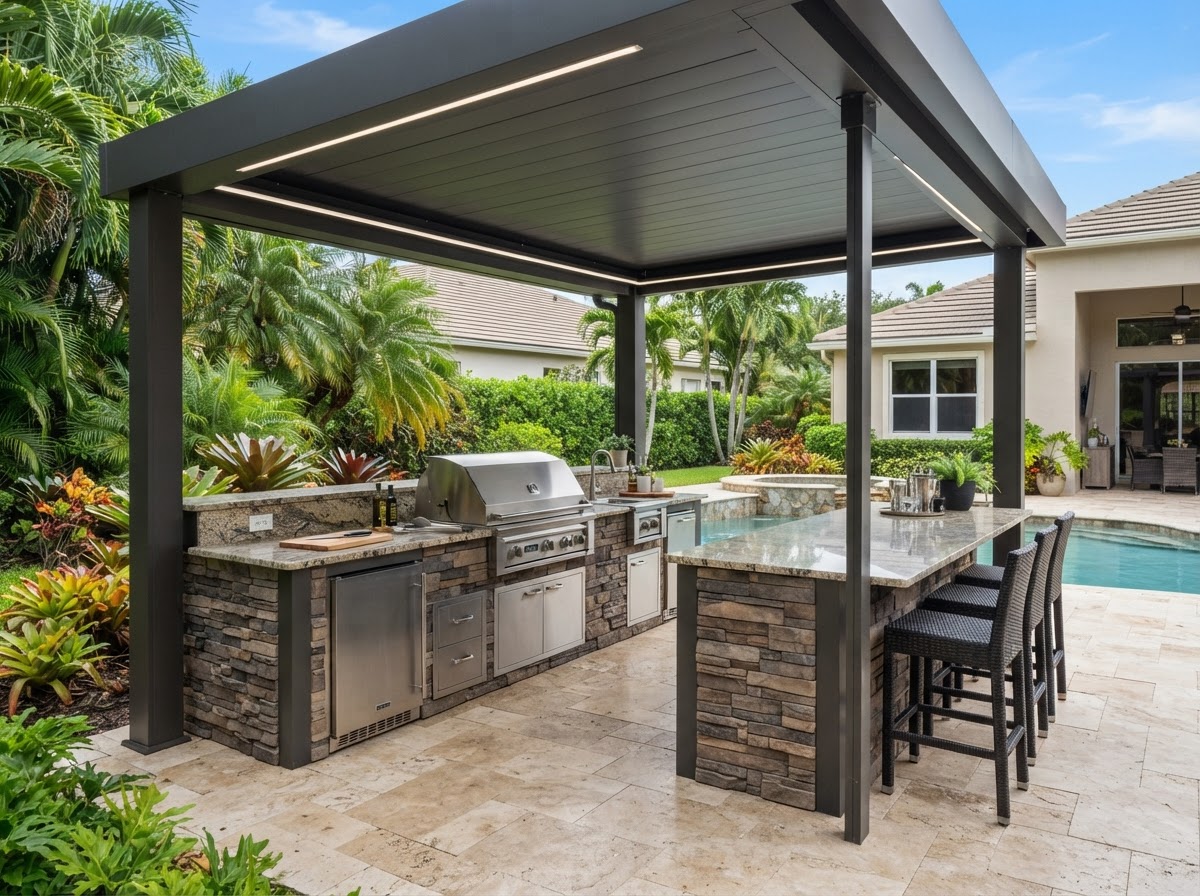
The grill is the centerpiece of most outdoor kitchens, and its selection deserves careful attention. BTU output determines how much heat the grill can produce, which affects how quickly and evenly it cooks. The cooking surface area should match the intended use — a grill for weeknight family dinners needs less surface than one for entertaining large groups. Built-in grills, designed to be installed into a counter, provide a seamless, professional look. Roll-in grills, which sit on a cart, offer more flexibility but less integration. The material of the grates — stainless steel or cast iron — affects heat retention and maintenance.
Refrigeration is a common addition to outdoor kitchens, and outdoor-rated refrigerators are built with different insulation, compressor sealing, and finishes than indoor models. An outdoor refrigerator keeps beverages and ingredients cold without requiring trips indoors, making the kitchen a self-contained entertaining zone. As with all outdoor components, the unit must be rated for outdoor use and positioned within the covered structure to protect it from direct rain and sun.
Storage drawers and cabinetry provide the infrastructure that makes the kitchen functional. Outdoor-rated stainless steel drawers keep utensils, fuel, and accessories organized and protected. The cabinetry is built on a durable frame — typically stainless steel or masonry — and finished with materials selected for weather resistance. The counter surface, whether stone or composite, must resist heat, staining, and weather. A bar overhang on one side of the counter allows seating, making the kitchen a social center.
Side burners, warming drawers, and other accessories extend the kitchen's capability. A side burner allows sauces and side dishes to be prepared outdoors, keeping the cooking process self-contained. Warming drawers keep finished dishes at temperature until serving. The selection of accessories should be driven by how the kitchen will be used — a kitchen for simple grilling needs fewer accessories than one designed for full entertaining.
The overhead structure is the element that ties the appliance selection together. A covered structure — an aluminum terrace or pergola — protects the appliances from direct sun and rain, extending their life and making the kitchen usable in all weather. The structure also provides the surface for integrated lighting that illuminates the cooking and prep areas. Designing the kitchen and the cover together ensures that the appliances, the structure, and the lighting all coordinate as a single system. This is the approach that produces an outdoor kitchen that performs for years in Florida's demanding climate. For more on this topic, read our guide on Planning an Outdoor Kitchen in Florida: What to Consider Before You Build.
Frequently Asked Questions
Learn About This Service
Fully functional outdoor kitchens built under custom aluminum structures, combining cooking, dining, and entertaining into a single weather-protected outdoor living space.
Outdoor KitchensMore Articles
Planning
Planning an Outdoor Kitchen in Florida: What to Consider Before You Build
A practical guide to planning an outdoor kitchen in Florida — covering layout, appliances, structure, utilities, and climate considerations.
Read Article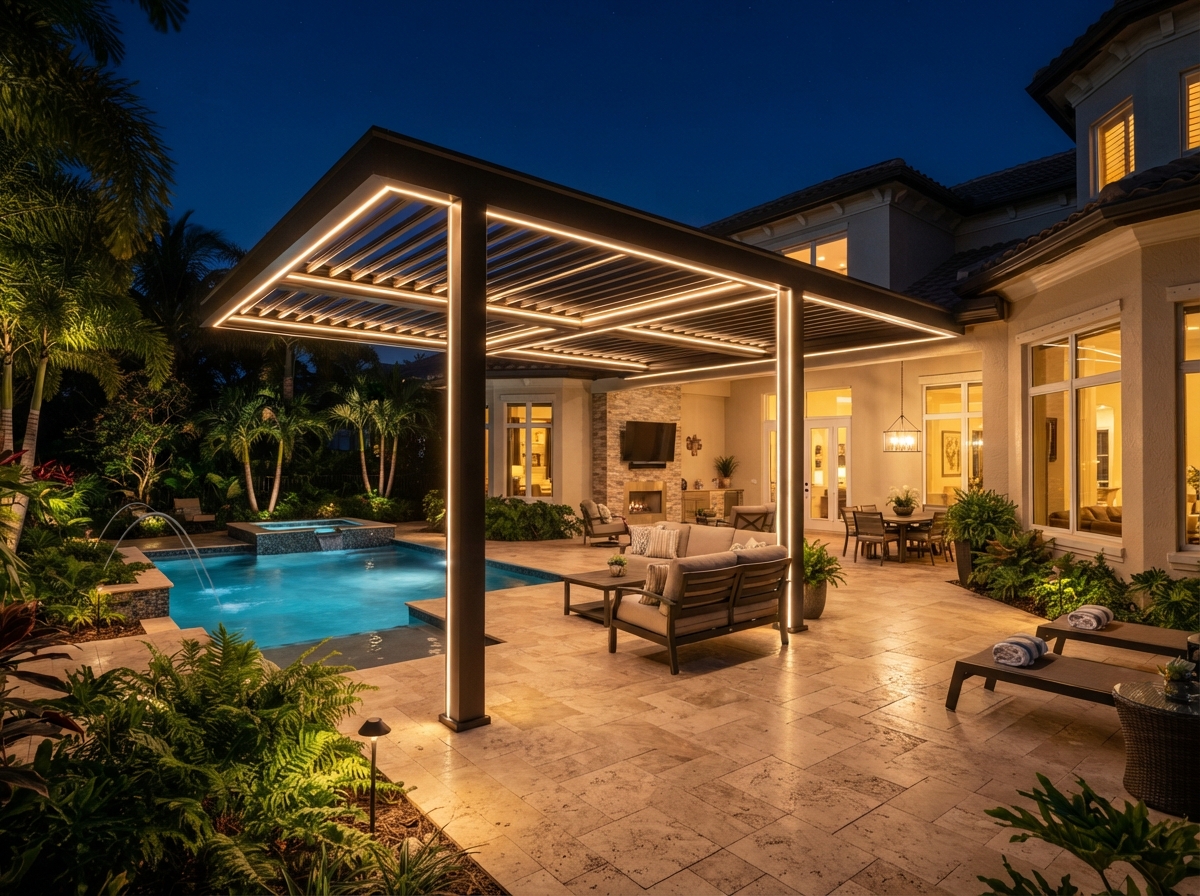
Design
Outdoor Kitchen Lighting: Designing for Function and Ambiance
How to plan lighting for an outdoor kitchen in Florida — task lighting for cooking, ambient lighting for entertaining, and structural integration considerations.
Read Article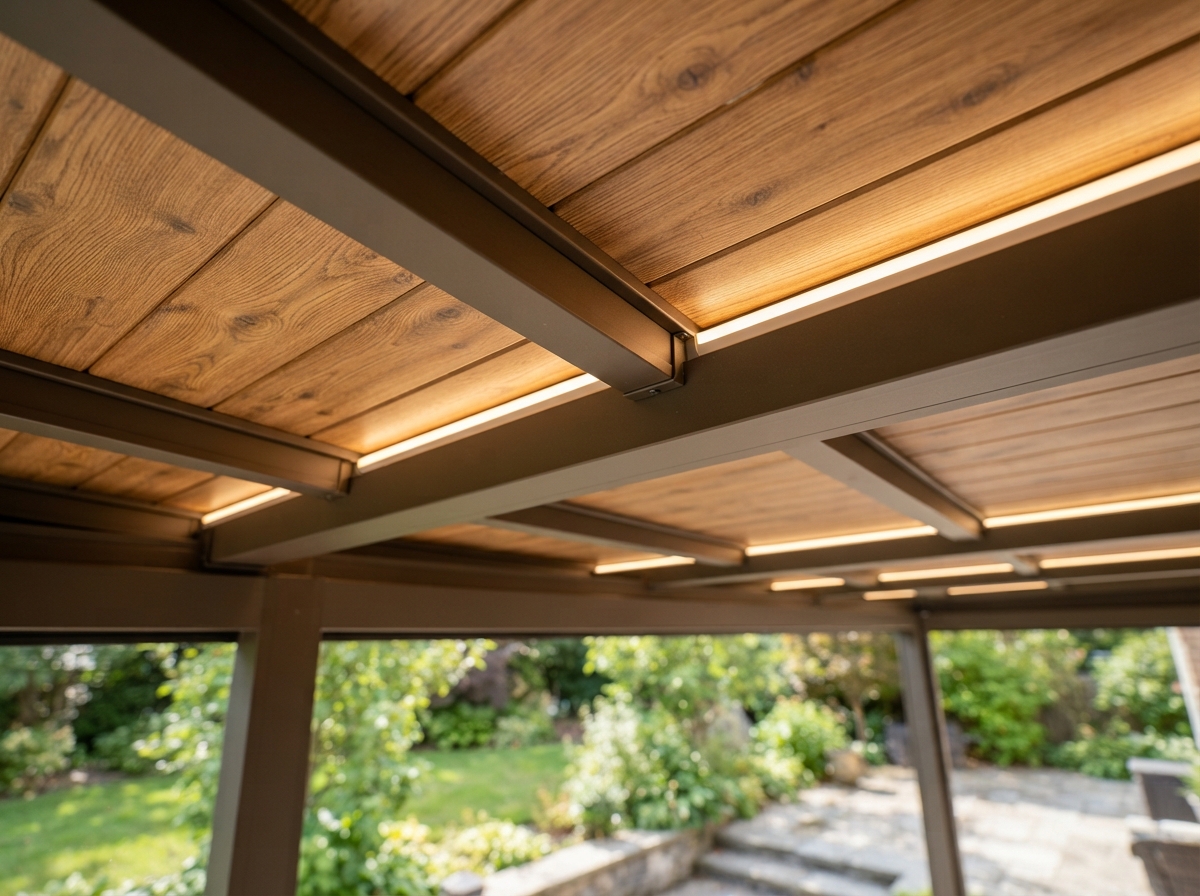
Materials
Aluminum vs. Wood Patio Covers: Which Material Wins in Florida?
A practical comparison of aluminum and wood for Florida patio covers — covering durability, maintenance, cost of ownership, and climate performance.
Read Article
