
Outdoor Kitchens
Outdoor Kitchen Lighting: Designing for Function and Ambiance
Lighting is what makes an outdoor kitchen usable after the sun goes down, and in Florida, where outdoor entertaining often extends into the evening, it is not an afterthought — it is a design element that should be planned from the start. This guide covers the key considerations for outdoor kitchen lighting: task lighting for cooking, ambient lighting for the surrounding space, and the structural integration that makes it all work cleanly.
Task lighting is the functional layer — the light that makes cooking safe and efficient. Over the grill and prep areas, focused lighting ensures that the cook can see what they are doing, whether that is checking the temperature of a steak or chopping vegetables. This lighting is typically brighter and more directed than ambient lighting. LED fixtures integrated into the overhead structure — either recessed into the ceiling or mounted on the beams — provide the focused illumination needed for cooking tasks. The positioning is planned during the design phase so that the light falls where it is needed, without creating shadows from the cook's own movements. If you're considering outdoor kitchens for your Florida home, our team can help you explore the options.
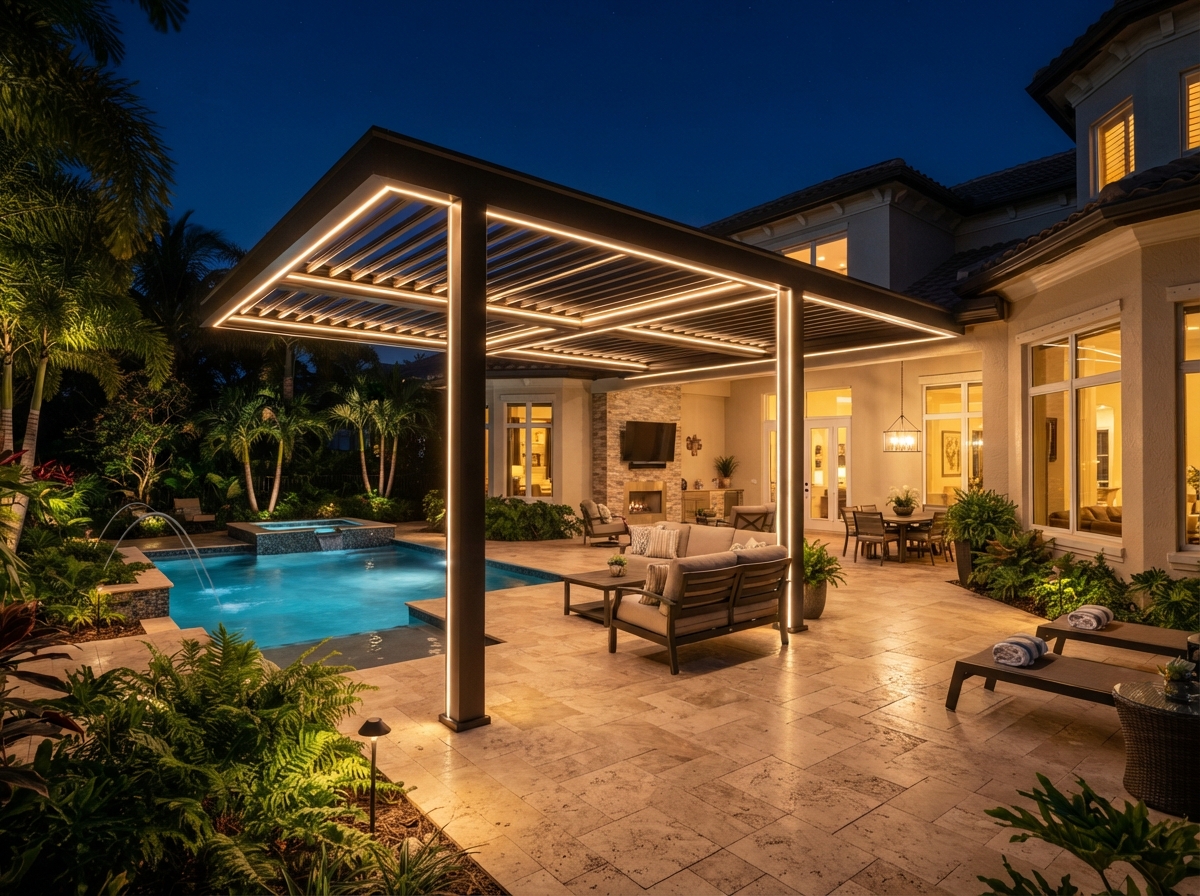
Ambient lighting is the atmospheric layer — the light that makes the space feel inviting and usable for dining and socializing. This is typically softer and more diffused than task lighting, creating a warm glow that defines the entertaining zone without harshness. LED strip lighting routed along the beams or under the bar counter can create a subtle wash of light that makes the space feel complete. The goal of ambient lighting is to make the outdoor kitchen feel like an extension of the home's interior — a space that is comfortable and inviting after dark, not a dark corner of the yard.
The overhead structure plays a central role in lighting design. An aluminum terrace or pergola provides the surface for mounting fixtures and routing wiring. When the kitchen and the cover are designed together, the lighting is integrated into the structure from the start — wiring is concealed within the beams, fixtures are positioned for optimal effect, and the lighting and structure coordinate as a single system. Retrofitting lighting into an existing structure is possible but often less clean, with visible wiring and less optimal fixture placement.
Power planning is a critical consideration. The lighting, along with any kitchen appliances, requires a power source, and the capacity and routing of that power must be planned during the design phase. The distance from the home's electrical panel to the kitchen location affects the complexity and cost of the electrical run. For motorized louvered pergolas, the lighting and motor power are planned together. A professional design ensures that the electrical system is properly sized, safely installed, and concealed within the structure.
Lighting controls add flexibility. Dimmable LED systems allow the homeowner to adjust the brightness for different occasions — full brightness for cooking, dimmed for dining. Separate switching for task and ambient layers allows each to be controlled independently, so the cooking lights can be off while the ambient lighting creates a relaxed atmosphere for after-dinner socializing. These controls are planned during the design phase and integrated into the structure.
Durability is essential in Florida. All lighting components must be rated for outdoor use, capable of withstanding humidity, salt air, and temperature swings. LED fixtures are the standard for outdoor kitchens — they are energy-efficient, long-lived, and available in a range of color temperatures from warm to cool. The fixtures, wiring, and connections are all selected for permanent outdoor performance.
A well-lit outdoor kitchen extends the usable hours of the space dramatically, making it as functional and inviting at night as it is during the day. The key is planning — integrating the lighting into the overhead structure, separating task and ambient layers, planning power and controls, and selecting durable, outdoor-rated components. When lighting is designed as part of the kitchen rather than added as an afterthought, the result is a space that works beautifully from the first burger to the last guest. For more on this topic, read our guide on Planning an Outdoor Kitchen in Florida: What to Consider Before You Build.
Frequently Asked Questions
Learn About This Service
Fully functional outdoor kitchens built under custom aluminum structures, combining cooking, dining, and entertaining into a single weather-protected outdoor living space.
Outdoor KitchensMore Articles
Planning
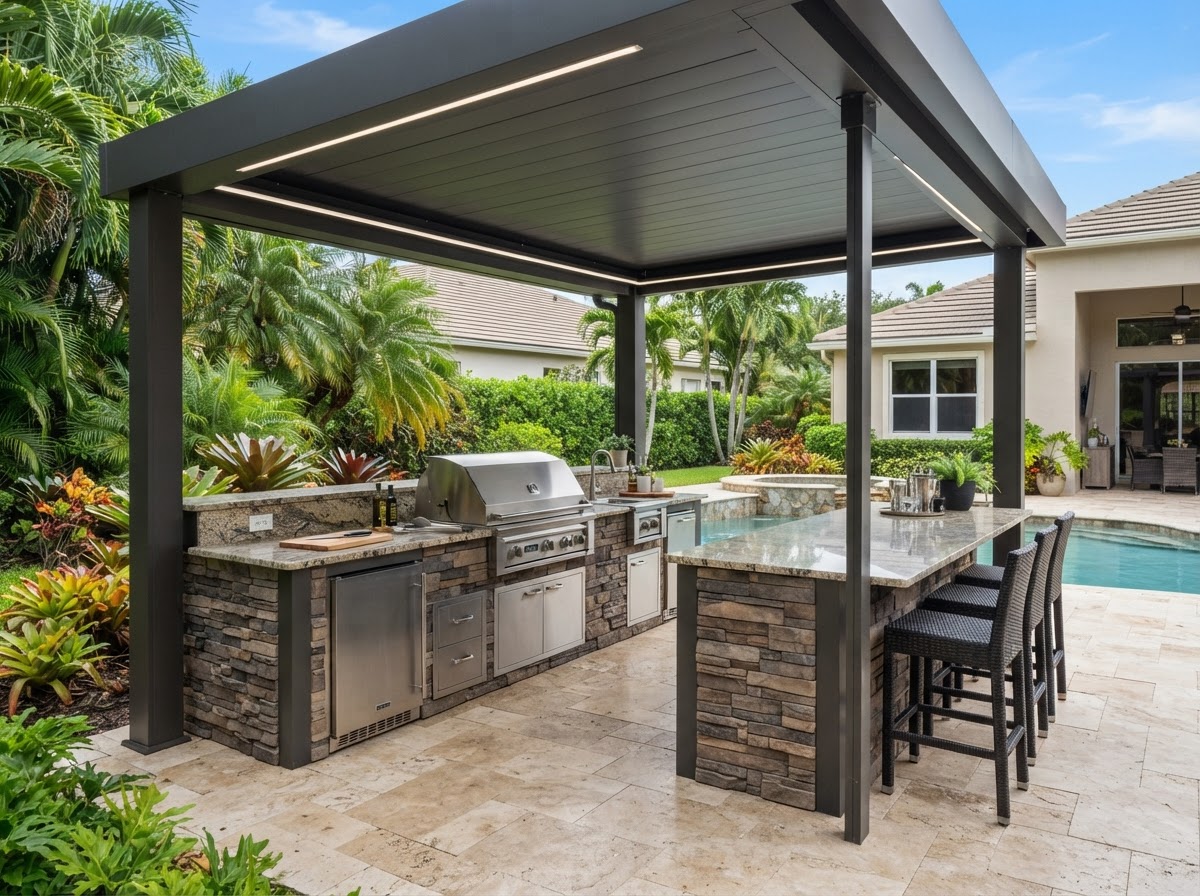
Planning an Outdoor Kitchen in Florida: What to Consider Before You Build
A practical guide to planning an outdoor kitchen in Florida — covering layout, appliances, structure, utilities, and climate considerations.
Read ArticleGuides
Choosing Outdoor Kitchen Appliances for Florida's Climate
A guide to selecting appliances that will withstand Florida's humidity, salt air, and sun — covering materials, ratings, and what to avoid.
Read Article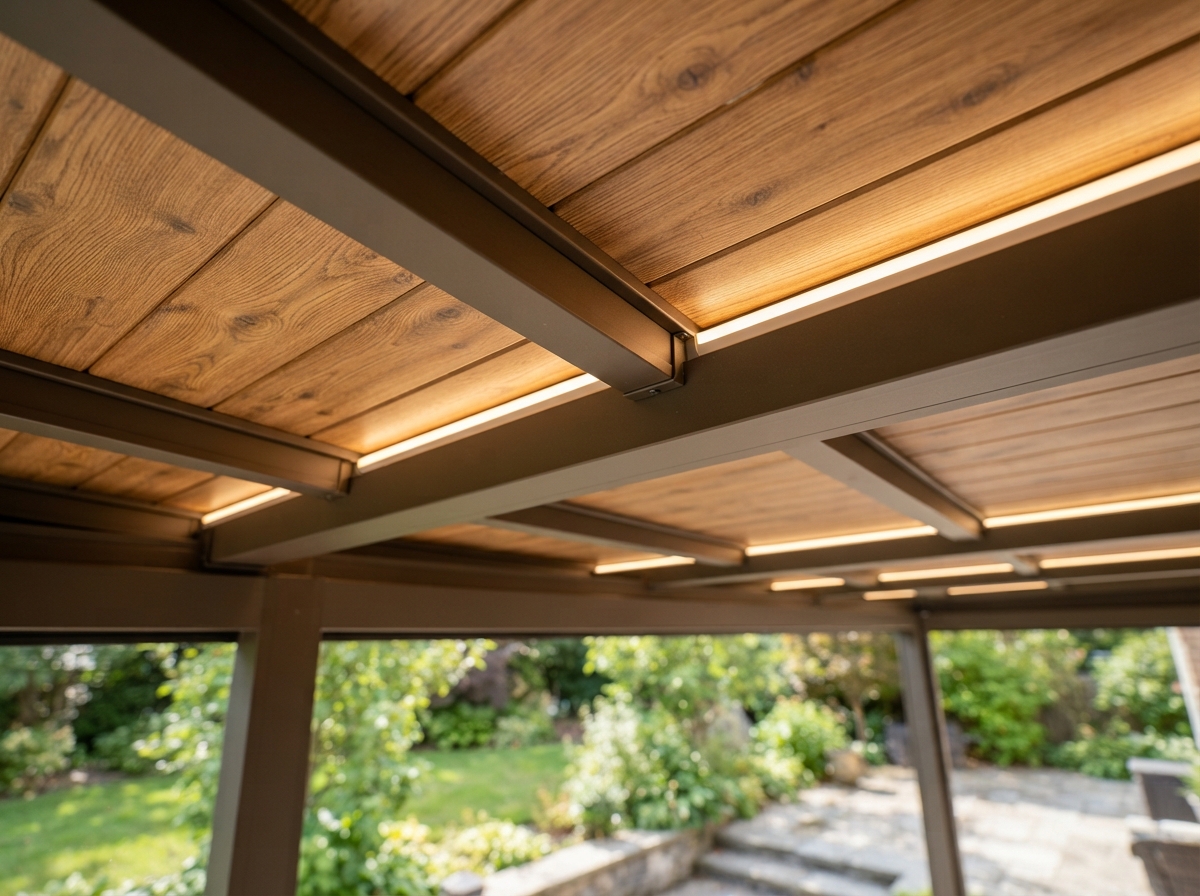
Materials
Aluminum vs. Wood Patio Covers: Which Material Wins in Florida?
A practical comparison of aluminum and wood for Florida patio covers — covering durability, maintenance, cost of ownership, and climate performance.
Read Article
